US Customs Hold Codes 2026: 1H, 2H, 5H, 7H and 9H The Complete Importer's Guide
Your freight just arrived at the Port of Los Angeles. Instead of a release notice, you get a message from your broker stating that your container has a 5H customs hold. Your first instinct is panic. That is understandable, but it is also premature.
A customs hold is not a seizure. It is a digital flag inside CBP's Automated Commercial Environment (ACE) system, and every flag has a specific code, a specific cause, and a specific resolution path. The problem is that most brokers give you the code without the context. Navigating the U.S. Customs Clearance Process 2026 effectively requires understanding exactly what these flags mean.
This guide breaks down every major CBP customs hold code, including 1H, 2H, 5H, 7H, 9H, PGA, and ISF. We explain what triggered the hold, how long CBP can legally keep your cargo, and what to do in the first 48 hours. The enforcement environment shifted significantly this year. For a broader perspective on these changes, review our US Customs Guide 2026 covering 5H Inspections, SAFE Act & IOR. If you are shipping from China to the US right now, read this before your next shipment leaves port.
Hold vs. Exam: The Distinction That Changes Everything
This is the single most misunderstood concept in US customs compliance, and getting it wrong costs importers real money.
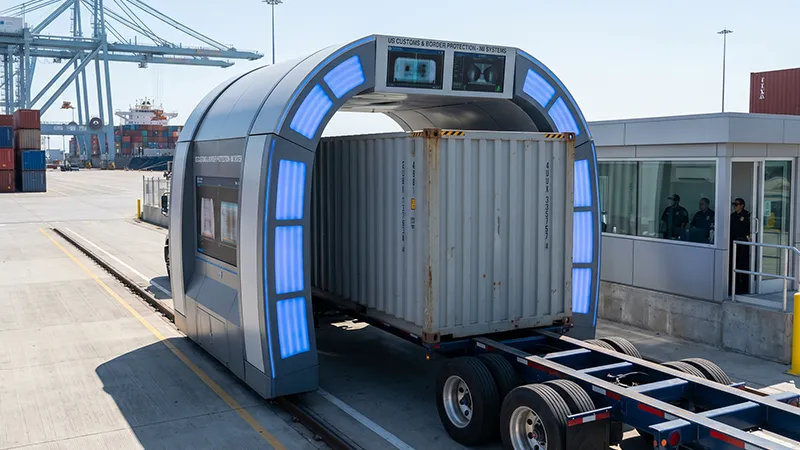
A hold is a status code inside ACE. It means do not release this cargo until further review. The code tells you which agency ordered the review and why. Nothing physical has happened to your container yet. An exam is what happens after CBP or a Participating Government Agency (PGA) decides how to act on that hold. A non-intrusive X-ray scan is a completely different situation from a full intensive examination where every box is opened and inventoried.
Why This Distinction Matters in Practice
Here is a scenario that plays out dozens of times every week at West Coast ports. An importer sees "7H" on their entry and assumes their container is being physically ripped apart. In reality, 7H is the hold code for a Non-Intrusive Inspection (NII), an X-ray scan that takes two to three hours, and the container never leaves the terminal. If your broker is not explaining that difference, ask them directly: "Has an exam type been assigned? What type?"
There is a second layer that most articles skip over. CBP release does not mean your shipment is fully cleared. If your entry has a PGA hold from the FDA, CPSC, or USDA, those agencies must issue their own release separately, even after CBP signs off. Treating a CBP release as total clearance is one of the most expensive mistakes a first-time importer can make.
The Complete CBP Hold Code Reference
The table below covers every major hold code in the ACE system. Each code appears in your AMS tracking or entry status. The release code column shows what you want to see when the hold is resolved. For fundamental baseline knowledge of import procedures, you can also reference the official U.S. CBP – Basic Import & Export guidelines.
| Hold Code | Hold Name | What It Means | Typical Resolution Time | Release Code |
|---|---|---|---|---|
| 1H | Physical Inspection Hold | CBP physically unloads and inspects cargo at a Container Examination Station (CES). Also called an Intensive or Tail Gate Exam. | 7 to 30 days | 1I |
| 2H | USDA / APHIS Hold | USDA flagged the shipment for pest, disease, or non-compliant wood packaging (ISPM 15). | 3 to 7 days | 2I |
| 4A | Document Review Hold | A paperwork discrepancy was identified. Fast to resolve if documents are clean. Escalates to 1H if failed. | 1 to 3 business days | 4C |
| 5H | Undetermined Inspection Type | CBP's Fast Doc Review flagged the entry but has not assigned an exam type yet. | 3 to 7 days | 5I |
| 7H | Non-Intrusive Inspection (NII) | An X-ray VACIS scan. The container stays sealed and never leaves the terminal. | 2 to 3 business days | 7I |
| 8H | In-Bond Movement Hold | Cargo is moving under bonded status and CBP placed a hold on that movement. | 2 to 5 business days | 8I |
| 9H | IOR Verification | CBP is checking whether your company, EIN, and customs bond data are accurate and consistent. | 3 to 14 days | Varies |
| ISF Hold | Importer Security Filing Hold | The ISF 10+2 filing was not filed, filed late, or has inaccuracies. Triggers a civil penalty. To understand the penalty structure, read What Is ISF in Shipping and Why It's Needed. | 2 to 5 business days | ISF corrected |
| PGA Hold | Participating Government Agency Hold | FDA, CPSC, FCC, or EPA has an independent interest. Runs on its own timeline. | 5 to 45+ days | Agency code |
For the complete official list of all ACE disposition codes, you can reference the CBP ACE Appendix D Disposition Codes directly on the official government portal.
The 5H Hold in 2026: What Is Actually Happening

If you have shipped from China to the US since February 2026, you have likely seen the 5H hold on your entry status. Here is what is driving it.
The Technical Background
The 5H code means CBP's Fast Doc Review system has flagged the entry but has not yet determined which examination type is appropriate. Think of it as ACE saying that something does not match, so the shipment is frozen while they determine the right response.
CBP upgraded its ACE document review system in September 2025. The upgrade introduced fully automated manifest quality review, cross-referencing declared values against commodity price benchmarks in real time. What used to require a human officer now happens in seconds. The result was a significant increase in 5H holds beginning in Q1 2026.
The Zero-Tolerance Issue Most Brokers Do Not Explain
Under the old customs process, importers could submit supplementary documents to address discrepancies after a hold was placed. Under the 5H Fast Doc Review process as it currently operates, that window is much narrower. CBP's review team compares your original commercial invoice, packing list, and manifest against reference databases. Documents submitted after the hold is flagged are viewed with skepticism.
Brokers who were used to cleaning things up after the fact are finding that the 5H process does not give them that margin anymore.
The Six Most Common 5H Triggers in 2026
| Trigger | Why It Flags | Prevention |
|---|---|---|
| Declared value below benchmark | ACE cross-references your declared value against market pricing for that HS code in real time. | Use accurate transaction value and document transfer pricing if applicable. |
| Generic cargo description | Terms like goods, merchandise, or household items cannot be matched to a commodity class. | Use the specific commercial name of the product on all documents. |
| Three-document mismatch | Any discrepancy between invoice, packing list, and manifest triggers an automated flag. | Compare all three documents line by line before the shipment departs. |
| Incorrect HS code | An HTS classification that does not align logically creates a contradiction CBP's system cannot resolve. | Have a licensed broker classify your goods before the first shipment. |
| Bond irregularities | A bond linked to an IOR that does not match the entry entity is a guaranteed flag in 2026. | Confirm bond ownership is in your legal entity's name with a matching EIN. |
| Missing product certifications | FCC IDs, CPSC certificates, and FDA registration numbers are required at entry. | Assemble all required certifications before the shipment departs origin. |
The DEA DE3 Flag: A New Variable as of May 2026
On March 21, 2026, CBP deployed the DEA's DE3 enforcement flag into ACE production. Starting May 4, 2026, entries triggering the DE3 flag are automatically rejected at the filing level before a hold code is even issued. Entries involving certain flagged chemical substances or precursors will not receive a 5H status; they will receive an outright filing rejection. If your products contain any chemical components, verify your HS codes are clear of DE3-flagged classifications before your next shipment.
The 9H Hold: CBP Is Reviewing You, Not Your Cargo
The 9H hold feels administrative rather than physical, which is why many importers underestimate it. In 2026, it has become one of the most consequential holds a China-to-US importer can face.
What the 9H Actually Means
A 9H hold means CBP's Centers of Excellence and Expertise (CEE) is conducting an entity-level verification of the Importer of Record (IOR). CBP is checking whether your company actually exists, whether your EIN is valid and matches the entity named on your customs bond, and whether your CBP Form 5106 is accurate and current.
In March 2026, CBP issued formal invalidation notices to importers whose Form 5106 data was found to be inconsistent. These notices indicated that due to inaccuracies, the Importer of Record number was being invalidated. These are real enforcement actions issued by CBP's CEE.
Why DDP Shipments Are at Highest Risk
If you ship under DDP (Delivered Duty Paid) terms from China, the freight forwarder or trading company is frequently acting as the nominal IOR, or they are using a shared customs bond to clear entries on behalf of multiple clients. CBP's 9H enforcement is targeting exactly this pattern.
A shared bond is not your bond. If CBP invalidates the IOR number associated with your shipments, every entry linked to that IOR comes under simultaneous review. Importers have reported receiving 9H holds across their entire active pipeline at once because of this.
What DDP and 9H Mean for Amazon FBA Sellers
Amazon requires a valid US-based IOR for all FBA shipments. If you are using a DDP shipping arrangement where the freight forwarder is acting as your IOR, you may not be eligible for IEEPA tariff refunds, and you are exposed to 9H holds that you cannot resolve on your own. The practical fix involves ensuring your IOR is properly established: register a US entity, obtain a real EIN, purchase a customs bond in that entity's name, and file your own CBP Form 5106 through your licensed broker.
How Long Can CBP Legally Hold Your Shipment
This question comes up in every freight conversation, and the answer has a legal foundation that most brokers never quote directly.
The 30-Day Statutory Window
Under 19 U.S.C. § 1499(c)(5), if CBP issues a written notice of detention and takes no final action within 30 days of that notice, the merchandise is treated as excluded by operation of law. That opens the path to an administrative protest. If you are at day 20 with no resolution and your broker is not escalating to the port's CEE, you have legal standing to push harder.
Resolution Timelines by Hold Type
| Hold Code | Typical Resolution | Notes |
|---|---|---|
| 7H (X-Ray / NII) | 2 to 3 business days | Container stays sealed; fastest exam in the system. |
| 2H (USDA/APHIS) | 3 to 7 days | Longer if APHIS identifies a pest or disease issue. |
| 4A (Document Review) | 1 to 3 business days | Escalates to 1H if documents fail. |
| 5H (Fast Doc Review) | 3 to 7 days if documents pass | Escalates to 1H if CBP cannot clear it. |
| 1H (Intensive Physical) | 7 to 30 days | Widest range; depends on port congestion and CES availability. |
| 9H (IOR Verification) | 3 to 14 days | If IOR is invalidated, a corrected Form 5106 restarts the clock. |
| PGA Hold (FDA/CPSC) | 5 to 45+ days | FDA can request physical samples, extending the window significantly. |
The General Order Warehouse Trigger
If cargo is not released within 15 days of arrival and the entry remains unresolved, the carrier can transfer the container to a General Order (G.O.) warehouse. Average daily storage fees run $50 to $100 for a 20-foot container. At day 30, CBP can legally order the goods auctioned or destroyed. This is not a hypothetical outcome; it is a documented result for abandoned holds every week at major US ports.
The Real Cost of a CBP Hold
Most write-ups describe the process. Almost none of them tell you what it actually costs. Here is a realistic breakdown for a standard 40-foot container.
| Cost Component | Typical Range | Notes |
|---|---|---|
| Demurrage (container at terminal past free time) | $150 to $500 per day | LA/Long Beach carriers are at the high end of that range in 2026 |
| Detention (chassis and container during exam) | $100 to $285 per day | Applies when container is moved to a CFS for examination |
| 7H (X-Ray) exam fee | $150 to $350 | Importer pays directly |
| 1H (Intensive Physical) exam fee | $800 to $2,500 | Varies by container size and port location |
| CFS drayage, unloading, and reloading | $700 to $1,400 combined | Round-trip drayage plus labor at the CFS |
| G.O. warehouse storage | $50 to $100 per day | Plus intake handling fee at transfer |
| Customs attorney | $1,500 to $5,000 | For a straightforward administrative protest |
Total cost of a forced return on a 40-foot container, including original ocean freight, return freight to China, and accumulated hold fees, regularly reaches $8,000 to $15,000 per container. For DDP sellers where cost responsibility is unclear in the contract, these figures frequently trigger disputes with forwarders, because inexperienced freight forwarders often fail to warn you about this exposure.
What Triggers a CBP Hold: Understanding Your Risk Profile
Not every hold means something went wrong. Some are random, some are statistical, and some are genuine compliance failures. Understanding which is which changes how you respond.
| Risk Factor | Why CBP Flags It | Who Is Most Exposed |
|---|---|---|
| New importer status | No prior compliance history for CBP to weigh against the entry | First-time importers, new US entities |
| China country of origin | Elevated targeting since 2018, accelerated in 2025 and 2026 | All China-sourced goods |
| PGA-regulated commodities | Electronics (FCC), food (FDA), children's products (CPSC) automatically generate holds. Documentation such as product safety test reports (toys) is critical here. | Any seller in these product categories |
| Declared value anomalies | ACE benchmarks declared value against market pricing for that HS code | Sellers who undervalue goods to reduce duty liability |
| Document inconsistencies | Any mismatch between invoice, packing list, manifest, and ISF triggers an automated flag | Sellers who use supplier-prepared documents without review |
| Bond and IOR mismatches | A bond not linked to the filing entity is a guaranteed 2026 flag | DDP shippers using forwarder bonds or shared bonds |
What to Do When You Receive a Hold Notification
Speed and organization determine outcomes. Here is what to do in the first 48 hours.
- Step 1: Get the specifics from your broker within four hours. Ask for the exact hold code (not a description, the actual code), which agency placed it, whether an exam type has been assigned, the current container location, and the demurrage free-time expiry date. If your broker cannot answer these questions quickly, contact the port directly through the CBP Port Contact Directory.
- Step 2: Assemble your complete document package immediately. Do not wait for CBP to tell you what they need. Pull together your commercial invoice, packing list, bill of lading, ISF confirmation, applicable product certifications, customs bond details, and your CBP Form 5106.
- Step 3: Track your 30-day legal window. From the date CBP issues a written detention notice, the clock starts running. At day 20 with no resolution, your broker must formally escalate to the port's CEE.
- Step 4: Know your options before day 15. Three paths exist before the G.O. transfer clock hits: continue pursuing release while accepting the transfer, arrange voluntary re-export, or file formal abandonment to stop future storage fees.
- Step 5: If you have a 9H hold, treat it as a legal matter. Engage a licensed US customs attorney. File a corrected CBP Form 5106 through your broker immediately. Do not attempt to re-route entries under a different IOR while the 9H is active.
Pre-Shipment Checklist: Prevent the Hold Before It Happens
| Action Item | What to Check | Why It Matters |
|---|---|---|
| Document consistency | Compare invoice, packing list, and manifest side by side before every shipment | Minor discrepancies in unit count, weight, or description are enough to trigger a 5H in 2026 |
| HS code classification | Have a licensed broker classify goods, not the supplier | Incorrect codes lead to duty miscalculations and CBP flags that are hard to correct retroactively |
| Customs bond ownership | A U.S. customs bond linked to an IOR that does not match the entry entity is a guaranteed flag. Confirm the bond is in your legal entity's name with a matching EIN and CBP Form 5106 | A mismatched or shared bond is a direct 9H trigger |
| Product certifications | Identify which PGA agency governs your product and have all certifications ready before departure | Certifications submitted after a hold is placed carry less weight with CBP reviewers |
| Wood packaging compliance | Confirm all solid wood packing material is heat-treated and marked to ISPM 15 | Non-compliant wood is one of the most consistent 2H triggers at every major US port |
| ISF filing timing | File the 10+2 at least 24 hours before vessel departure from the foreign port | Late ISF generates a hold and a civil penalty exposure. Departure, not arrival, is the deadline |
If your current clearance process was built for the pre-2026 enforcement environment, there is a good chance it has a gap that CBP will find before you do. Our compliance team conducts a free pre-import compliance review of your import setup: bond ownership, IOR registration, document consistency, and HTS code classification.
Request a Free Compliance ReviewFrequently Asked Questions
What is the difference between a customs hold and a customs seizure?
A hold is a temporary administrative status in CBP's ACE system that prevents cargo release pending review. A seizure is a formal legal action under 19 U.S.C. § 1595a in which CBP takes physical possession of the goods. The vast majority of customs holds never become seizures.
Can I recover exam fees and demurrage if CBP ultimately releases my shipment?
Generally, no. Demurrage, detention, and exam fees are not reimbursed by CBP when cargo is released, even when the hold was triggered by automated targeting rather than an actual violation. Administrative protests are possible but fee recovery is rare.
What does "5I" mean on my entry status?
5I is the release code corresponding to the 5H hold. It means CBP's Fast Doc Review team reviewed your documents and cleared the entry. Your cargo should proceed to release, subject to any remaining PGA holds from FDA, CPSC, or other agencies.
How do I know if my container has been transferred to a G.O. warehouse?
Your broker should notify you before or at the time of transfer. You can also verify through ACE entry status if you have portal access. If your free time has expired and the entry is still on hold, ask your broker directly whether a G.O. transfer has been initiated.
My broker says they cannot do anything. Is that true?
Partly. Brokers cannot order CBP to release a hold before the review is complete. But a good broker can and should actively communicate with the port's Entry Unit or CEE, escalate through CBP's formal inquiry channels, and provide any requested documentation within the response window. When choosing a China freight forwarder, working with transparent partners prevents these communication gaps.


