Shipping Children’s Toys from China to USA: CPC, CPSC & Customs Guide 2026
⚡ Quick Guide: Mandatory Requirements for Importing Toys to USA (2026)
To clear US Customs with children's products (ages 12 and under), you must provide:
ASTM F963-23 Test Report: From a CPSC-accepted ISO 17025 laboratory.
Children's Product Certificate (CPC): Issued by the US Importer or Manufacturer, not the Chinese factory.
Mandatory eFiling: CPC data must be uploaded to the ACE system before arrival (Effective Dec 2025).
Permanent Tracking Label: Printed on the product and packaging (Batch ID, Date, Location).
UN38.3 Summary: Required for all lithium batteries, including those in toys (UN3481).
Introduction: The "High Risk" Reality of Toy Importing
Toys are consistently one of the most lucrative categories for Amazon FBA sellers and B2B importers. However, they also represent one of the highest-risk categories in international trade. The statistics are sobering: in Fiscal Year 2024 alone, U.S. Customs and Border Protection (CBP) and the CPSC seized over 1.5 million dangerous or illegal toys, with more than 102,000 seizures related specifically to lead contamination.
As we head into 2026, the era of "flying under the radar" with low-value or loosely documented shipments is officially over.
Two major regulatory shifts have fundamentally changed the landscape:
-
The End of De Minimis: Effective August 29, 2025, the exemption that allowed low-value shipments to bypass formal entry has been eliminated for many product classes. Every toy shipment now faces full regulatory scrutiny.
-
Mandatory ACE eFiling: The CPSC now requires certificate data to be digitally filed before the cargo arrives. A paper PDF "available upon request" is no longer sufficient.
For Amazon FBA sellers shipping toys from China to the USA, this means the barrier to entry has raised. One missing label, one outdated test report, or one typo on a CPC can lead to a container being detained or seized.
At Zbao Logistics, we are proud to be an Amazon Service Provider Network (SPN) partner. We don't just ship boxes, we act as your Compliance Firewall. Whether you are shipping plushies, plastic blocks, or battery-operated robots, this guide covers the exact steps to get your products through US Customs and into Amazon Fulfillment Centers without delays.
1. The Safety Standards: ASTM F963-23 & Chemical Limits
Shipping toys to the USA is no longer about just finding a factory with the lowest price. It is about rigorous compliance. If your documentation references old standards, your shipment is likely to be deemed non-compliant and may be detained for further review.
ASTM F963-23: The Only Standard That Matters
As of April 20, 2024, the mandatory federal safety standard for toys in the US is ASTM F963-23.
Why this matters in 2026:
Many Chinese factories, especially smaller ones, may still be using test reports citing ASTM F963-17 (the previous version) to save money. These reports are invalid. If you submit a CPC based on the 2017 standard, CPSC will reject it.
-
The Rule: All toys manufactured today must comply with the 2023 revision under 16 CFR 1250.
-
No New Changes for 2026: Based on current CPSC guidance, no newer version (such as F963-24) is scheduled for 2026. Therefore, ensuring your factory tests against the '23 version is the critical step.
The "Chemical Curtain" (Lead & Phthalates)h
Chemical testing is the most common reason for physical exams. While there are no new chemical limit changes scheduled for 2026, the existing limits are strictly enforced under the Consumer Product Safety Improvement Act (CPSIA).
Lead Limits:
-
Total Lead Content: Maximum 100 ppm in accessible parts (substrates like plastic, metal, wood).
-
Lead in Paint: Maximum 90 ppm in surface coatings.
-
Zbao Insight: Painted metal toys and brightly painted wooden toys tend to be scrutinized more closely, because they historically account for many lead violations. If you import these, ensure your lab report is from a top-tier provider.
Phthalate Limits:
Eight specific phthalates (DEHP, DBP, BBP, DINP, DIBP, DPENP, DHEXP, DCHP) are restricted to a maximum of 0.1% (1,000 ppm). These are commonly found in soft plastics (like rubber duckies or squishy toys).
The "Small Parts" Cylinder Test
For toys intended for children under 3 years old, the "Small Parts Ban" (16 CFR 1501) is non-negotiable.
The 31mm Rule:
Labs use a specialized test cylinder with a diameter of 31.7 mm and a depth of 57.1 mm (approximating a child's throat).
-
The Test: If any component of the toy fits completely into this cylinder—either as sold or after "use and abuse" testing (impact, torque, tension)—it is a banned hazardous substance.
-
The Consequence: There is no "fix" for this. If a toy for a 2-year-old fails the small parts test, it cannot be imported. It must be destroyed or re-exported.
-
Labeling: Toys for children ages 3–6 that contain small parts must carry the specific "Choking Hazard" warning label on the packaging.
2. The Documentation Trap: CPC & Importer Identity
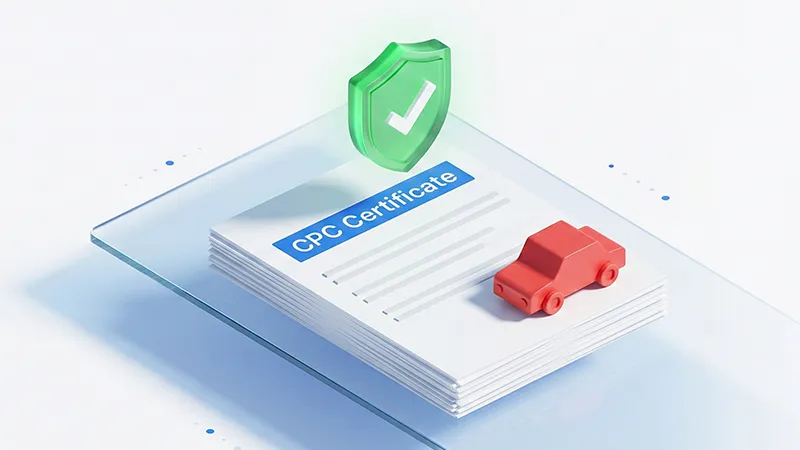
The Children’s Product Certificate (CPC) is the single most important document for your shipment. It is also the #1 reason for rejections by Amazon and Customs.
Many sellers mistakenly believe the CPC is a certificate provided by the factory or the lab. This is incorrect. The CPC is a legal self-declaration issued by the US Manufacturer or Importer of Record.
The "Importer of Record" (IOR) Crisis
Element #3 of the CPC requires the "Name, Full Mailing Address, and Telephone Number of the Importer."
The Trap:
Most small Amazon sellers or foreign brands enter their Chinese factory's address in this field, or leave it blank. THIS IS ILLEGAL.
The Law:
Under the CPSIA, the "Importer" is defined as the legal entity bringing the goods into US commerce. US Customs (CBP) and the CPSC do not recognize a Chinese factory as the US Importer. They require a valid US contact who can be held liable for recalls.
The Impact:
Internal case reviews show a significant number of first-time IOR setups fail or face delays because the entity listed on the CPC does not match the entity on the Customs Entry (CBP Form 7501).
Zbao’s Solution: DDP Shipping
If you are a foreign seller without a US entity, how do you satisfy this requirement?
This is where our DDP Shipping from China service becomes a strategic advantage.
-
How it works: When you ship DDP (Delivered Duty Paid) with Zbao Logistics, we (or our US entity partner) act as the legal Importer of Record for the customs entry.
-
The Benefit: We handle the Customs Bond, the duty payments, and the entry declarations. By using our DDP service, you leverage a US-based importer with established compliance history, which generally helps lower perceived enforcement risk compared to ad-hoc foreign importers.
Verify Your Lab (CPSC-Accepted)
You cannot use just any testing lab. Section 14(a)(3)(E) of the CPSA mandates that testing must be conducted by a CPSC-Accepted Laboratory.
How to verify:
-
Go to the CPSC Accredited Lab Search.
-
Search for your lab's name.
-
Crucial Step: Click on the lab's details and check the "Scope." The lab must be specifically accredited for ASTM F963-23. A lab might be accredited for "Textiles" but not "Toys." If they test your toys without the proper scope, the report is worthless.
The Permanent Tracking Label
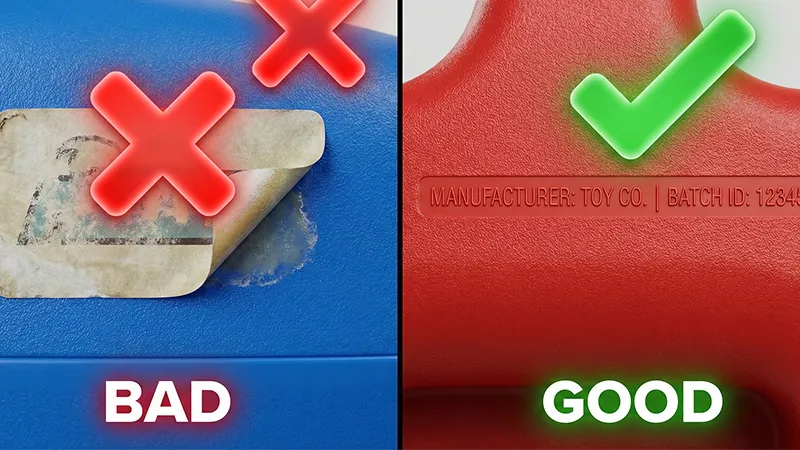
This is the most common physical defect we see during inspections at our Shenzhen warehouse.
The Requirement:
A tracking label must be permanently distinguished on the product AND the packaging.
-
Data Required: Manufacturer Name, Location (City/Country), Date of Production (Month/Year), and a unique Batch ID.
-
Stickers are NOT Compliant: You cannot simply slap a paper sticker on the toy. It must be printed, engraved, or molded onto the product. If a child can peel it off, it is non-compliant.
-
Zbao QC: We perform visual checks on tracking labels before loading. If we see non-compliant labels, we alert you immediately so the factory can rework them in China, saving you thousands in US fines.
3. Customs in 2026: Mandatory eFiling & Algorithms
The days of providing documents "only upon request" are over. The CPSC has modernized its enforcement tools, moving from reactive inspections to proactive data targeting.
No CPC, No Entry (Mandatory eFiling)
Under the CPSC’s updated rule (16 CFR Part 1110), electronic filing (eFiling) of CPC data to the ACE (Automated Commercial Environment) system is now mandatory.
-
The Change: Previously, importers kept a PDF of the CPC and emailed it only if a Customs Officer asked for it. Now, you must upload certificate data (via the PGA Message Set) to ACE before the cargo arrives at the US port.
-
The Consequence: If the data is not in the system when the ship docks, CBP cannot release the goods. It will sit in a bonded warehouse (accruing storage fees) until the data is filed.
RAM 2.0: The Algorithm Watching Your Cargo
CPSC uses RAM 2.0 (Risk Assessment Methodology)—an advanced AI-driven algorithm that scores every incoming shipment based on risk factors.
What triggers a high risk score?
-
Foreign Seller Penalty: Non-US IORs and first-time importers tend to face significantly higher physical exam rates because they are viewed as higher risk for liability evasion.
-
Missing Data: If your eFiling data is incomplete (e.g., missing the lab's phone number), the algorithm flags it.
-
High-Risk Categories: Toys for children under 3, painted toys, and battery-operated toys are automatically flagged for Intensive Exams.
The Cost of an Exam:
If flagged, your container goes to a Centralized Examination Station (CES).
-
Exam Fee: $200–$500 per shipment.
-
Demurrage: $150+ per day for storage.
-
Delay: 1-3 weeks added to your lead time.
4. Shipping Battery-Operated Toys (UN3481) from China to USA
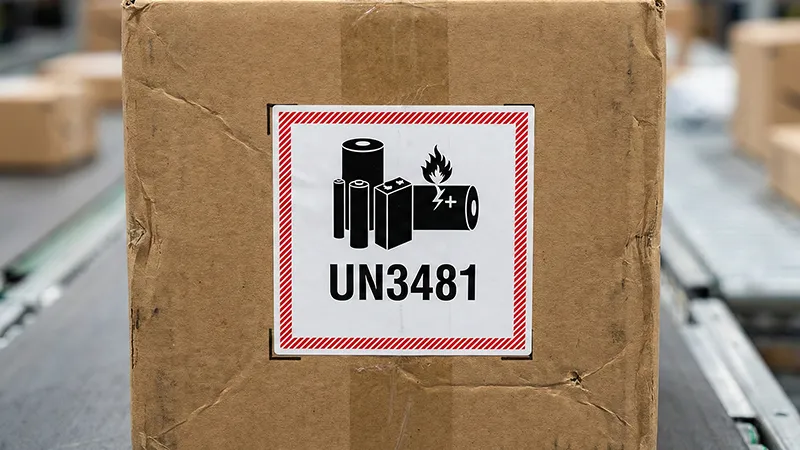
If your toy lights up, makes sound, or moves, it is classified as Dangerous Goods (DG).
Most battery-operated toys fall under UN3481 (Lithium-ion batteries packed with or contained in equipment).
The "Golden Documents" for Ocean Freight
For LCL or FCL shipping, we cannot load your cargo onto a vessel without these two critical documents. Your factory must provide them.
-
UN38.3 Test Report: This proves the specific battery model has passed the 8 mandatory safety tests (Altitude, Thermal, Vibration, Shock, Short Circuit, etc.). Note: This applies to all lithium cells/batteries, including those contained in toys.
-
MSDS (Material Safety Data Sheet): It must be in English. Chinese-language MSDS documents will be rejected by US consolidators and Customs.
Labeling for LCL: The "Overpack" Rule
Labeling errors are the most frequent cause of LCL shipment rejections at the origin port.
-
The Lithium Battery Mark: You must use the standard 100mm x 100mm label with the battery icon and UN3481 code.
-
Material: It must be printed on weather-resistant material (vinyl/synthetic), not standard paper. Ocean air is humid; paper labels peel off or fade, leading to non-compliance at the destination.
-
-
The "OVERPACK" Rule: If you are using our Warehouse Consolidation service, we will often combine your small cartons onto a pallet or into a master gaylord box. In this case, the outside of the master unit must be marked with the word "OVERPACK" in letters at least 12mm high. This tells the port handler, "There are dangerous goods labels inside this consolidated unit that you cannot see."
5. Logistics Strategy: How to Save Money Safely
Shipping toys involves managing multiple SKUs, multiple factories, and strict compliance. How do you optimize costs without cutting corners?
Strategy A: Buyer’s Consolidation (The FCL Advantage)
Many toy sellers source plushies from Factory A, plastic robots from Factory B, and puzzles from Factory C.
-
The Old Way: Sending 3 separate LCL shipments. This means 3x destination clearance fees, 3x documentation fees, and a higher risk of one shipment getting lost.
-
The Zbao Way: We collect goods from all your factories into our central Shenzhen warehouse. We inspect the labels and packaging for compliance. Then, we consolidate them into a single Full Container Load (FCL).
-
The Result: You pay for one Bill of Lading and one Customs Entry. Your goods travel together, are better protected, and arrive at the same time.
-
Strategy B: The DDP Advantage for Foreign Sellers
If you are based outside the US (e.g., Europe, China, Australia) and sell on Amazon US, maintaining a US entity just for imports can be expensive and complex.
-
Zbao DDP: By using our DDP service, you leverage our bond and importer status. This simplifies your paperwork and ensures that your "Importer" field on the CPC is valid.
Why Choose an Amazon SPN Provider?
Zbao Logistics is an official Amazon Service Provider Network (SPN) partner.
-
Integration: As a ShipTrack carrier, we have direct API integration with Amazon fulfillment centers.
-
Efficiency: We can book delivery appointments (ISA/Carrier Central) more efficiently than non-partnered forwarders, reducing the dreaded "check-in delays" during Q4 peak season.
-
Knowledge: We understand Amazon's specific packaging requirements (poly bag warnings, FNSKU labels, box strength) and verify them before shipping.
6. FAQ: Common Questions
Q1: Does Amazon check every toy listing?
A: Yes. Amazon's compliance bot ("Amabot") automatically requests compliance documentation (CPC and Test Reports) for new listings in the Toys & Games category. If you cannot provide a valid CPC from a CPSC-accepted lab within the deadline, your listing will be suppressed.
Q2: Can Zbao Logistics provide the CPC for me?
A: No. By law, the CPC must be issued by the US manufacturer or Importer of Record based on passing lab results. A freight forwarder cannot issue a CPC. However, if you use our DDP service, we can guide you through the process as we handle the entry.
Q3: Do I need a Class 9 Hazard Label for toys?
A: Usually, no. Class 9 labels are required for lithium batteries with a capacity greater than 100Wh. Most toy batteries are much smaller (10-50Wh). For standard toys, you typically only need the Lithium Battery Mark (UN3481).
Q4: Can I use a sticker for the Tracking Label?
A: No. The CPSIA requires the tracking label to be permanent. Stickers that can be easily peeled off are not compliant. The information must be printed on the box or molded into the plastic of the toy.
Q5: My factory says they have a "Generic CPC." Can I use it?
A: Absolutely not. A CPC must be specific to the Batch, the Date of Production, and the US Importer. Using a generic template from a factory is the fastest way to get your shipment seized by Customs or rejected by Amazon.
Q6: How long is my toy test report valid?
A: There is no fixed "expiration date" under CPSC rules. However, if you change the factory, material, paint color, or design, you must re-test before shipping new batches. For unchanged products, you must still follow a periodic testing plan (for example, annually) to maintain your CPC.
Conclusion & Disclaimer
Shipping toys from China to the USA in 2026 is a high-stakes game. With the end of de minimis and the rise of algorithmic customs targeting, the cost of "guessing" is too high. Non-compliant toys don't just get fined; they get destroyed.
However, these barriers are also an opportunity. While your competitors struggle with seized containers and "generic" CPC rejections, you can build a streamlined supply chain that clears customs in days, not weeks.
Don't let a cheap shipping quote cost you your entire inventory at the border. Partner with an Amazon SPN provider who understands the difference between a "toy" and a "banned hazardous substance."
Disclaimer: This guide is for informational purposes and does not constitute legal advice; importers are responsible for their own compliance decisions and should consult with legal professionals regarding specific products.
Ready to ship your toys safely?
Send us your product images and HS codes today. We will perform a free compliance assessment and provide a transparent shipping quote.


