How to Choose a Freight Forwarder from China to the USA: Costs, FBA Requirements, and 7 Red Flags to Avoid (2026 Updated)
A first-time importer once sent us a final invoice from their previous freight forwarder. The original quote was $1,600 for ocean freight. The actual bill came to $2,940. The difference wasn't a mistake — it was Terminal Handling Charges, a Chassis Fee, ISF filing, and inland drayage to the FBA warehouse, none of which appeared on the original quote. The forwarder wasn't technically lying. They just weren't including everything.
This happens constantly in the China-to-USA freight market. The cheapest quote you get typically covers about 55–65% of your real landed cost. The rest appears after your cargo clears customs, and by then you have no leverage. This guide walks you through how to evaluate a freight forwarder properly, what transparent pricing actually looks like, what Amazon changed for FBA shipments in 2026, and seven warning signs that should make you walk away from any quote.
For a full breakdown of the role difference between a forwarder and a customs broker before you continue, see our guide: Freight Forwarder vs. Customs Broker: What's the Difference?
What Does a China Freight Forwarder Actually Do?
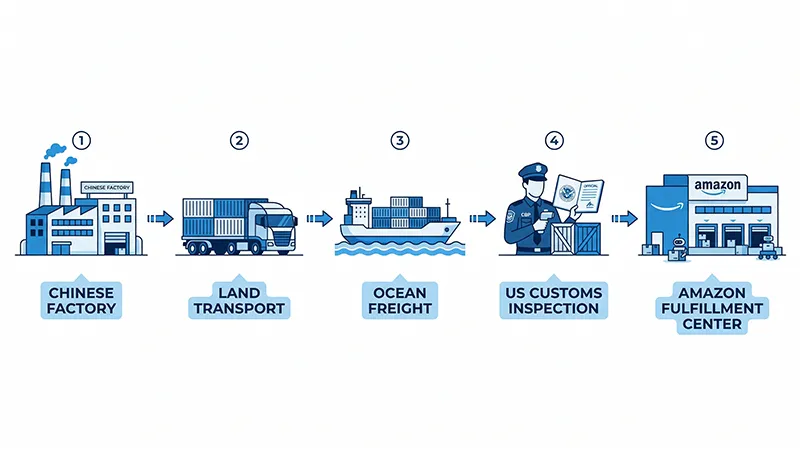
A freight forwarder is the logistics coordinator who moves your cargo from a factory in China to a destination in the United States. They book space with ocean carriers or airlines, arrange trucking on both ends, prepare export documents, and typically coordinate customs clearance through a licensed customs broker. Think of them as a general contractor: they don't own the trucks or the ships, but they manage everyone who does.
The confusion most importers have is conflating several different roles. Here's how they break down:
| Role | What They Handle | License Required | Who Selects Them |
|---|---|---|---|
| Freight Forwarder | Full transport coordination, booking, documentation | FMC OTI License (USA) | You (the importer) |
| Customs Broker | U.S. CBP clearance, duties, HTS classification | CBP-licensed broker | Often hired by your forwarder |
| NVOCC | Issues their own House Bill of Lading, consolidates cargo | FMC NVOCC License | Often the forwarder itself |
| 3PL Warehouse | U.S.-side storage, FBA prep, returns | None required | You (or your forwarder) |
A quality freight forwarder from China to the USA will operate as, or have a formal partnership with, an FMC-licensed NVOCC and a licensed customs broker. You can verify any forwarder's FMC license status directly at the Federal Maritime Commission's public registry. If a company cannot provide an FMC license number, that's an immediate concern.
For a deeper look at how NVOCCs differ from standard forwarders, and why it matters for your cargo insurance and liability, see: NVOCC vs. Freight Forwarder: Key Differences for Importers
Air Freight vs. Sea Freight: Which One Is Right for Your Shipment?
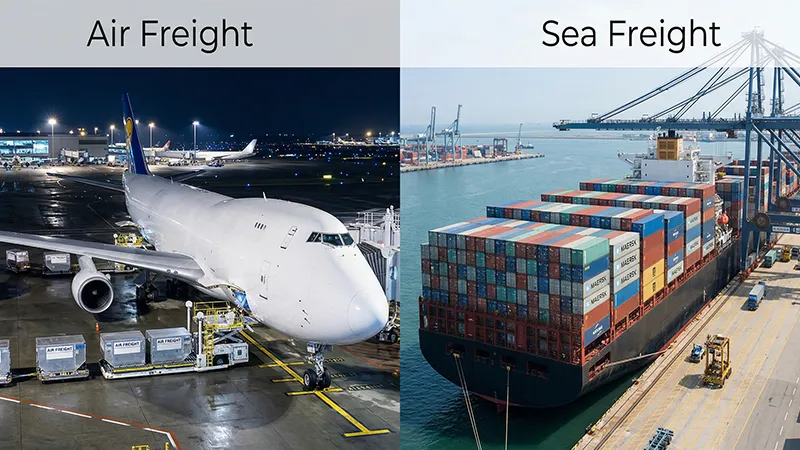
The answer depends almost entirely on two things: how much your shipment weighs, and how quickly it needs to arrive. Neither option is universally better — they serve different situations.
🔍 Not sure which shipping mode fits? Answer two quick questions:
Q1: How heavy is your shipment?
Q2: When does it need to arrive at your FBA warehouse?
| Air (Standard) | Air (Express) | Sea FCL | Sea LCL | |
|---|---|---|---|---|
| Port-to-Port Transit | 5–8 days | 3–5 days | 14–35 days | 18–40 days |
| Door-to-FBA Total | 7–12 days | 5–8 days | 21–45 days | 25–38 days |
| Best Cargo Weight | Under 200 kg | Any weight | Over 5 CBM | Under 5 CBM |
| DDP Cost (West Coast) | $6.5–$9.0/kg | $9.0–$13.0/kg | $4,500–$6,500 (40HQ) | $150–$200/CBM |
| DDP Cost (East Coast) | $7.5–$10.0/kg | $10.0–$13.0/kg | $6,000–$9,000 (40HQ) | $220–$300/CBM |
| FBA Compliance | ✅ Straightforward | ✅ Straightforward | ✅ Straightforward | ⚠️ Confirm with forwarder |
| Best For | New product launches, replenishment under 200 kg | Urgent restocks, missed deadlines | Bulk replenishment, Q4 inventory | Samples, small test orders |
| Q2 2026 Risk | 🔴 FSC up ~7% | 🔴 FSC up ~7% | 🔴 +$200–$400/FEU from April | 🟠 Moderate |
Rates as of March 2026. Door-to-FBA includes export customs, transit, U.S. port clearance, inland drayage, and FBA check-in. Swipe left on mobile to see all columns.
Choose air freight when speed is the primary concern or when your shipment is under 150 kg. For a new product launch where you can't afford a stockout, the premium over sea freight is often worth it. Flexport's current live quote for a standard 1,000 kg air shipment from Shenzhen to LAX is running $6,117–$6,300 all-in at the carrier level, before your forwarder's service fee and U.S.-side delivery.
Choose sea freight when you're shipping more than 2 CBM and have at least 5–6 weeks of lead time. An FCL (full container load) almost always delivers a lower cost per unit than air at that volume. If you're not filling a whole container, LCL (less than container load) consolidation is the right move, but confirm your forwarder can handle FBA delivery appointments from an LCL shipment specifically.
For detailed routing options and carrier comparisons: Air Freight from China to USA: Rates, Transit Times, and FBA Routing Guide | Sea Freight from China to USA: FCL vs. LCL Explained
Why Two Quotes Are Never the Same: The Hidden Fee Problem
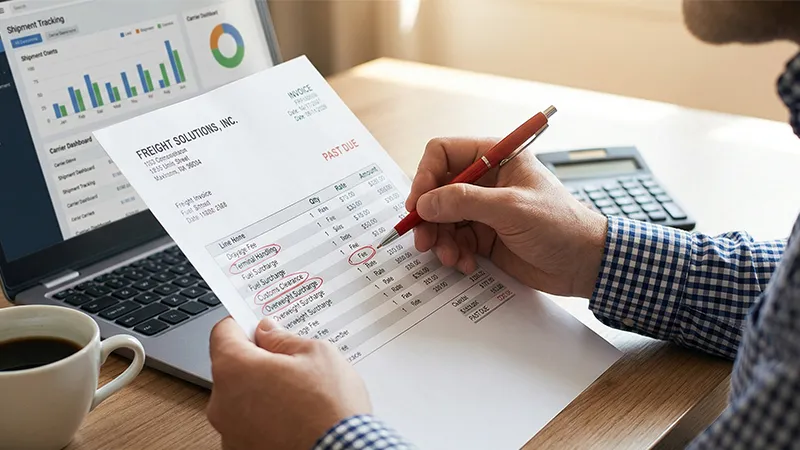
The most common question we hear from new importers is: "I got three quotes for the same shipment, and the cheapest is 40% less than the most expensive. What am I missing?" The answer is almost always the same: the cheap quote is a port-to-port ocean freight number, not an all-in landed cost.
Here's how Incoterms affect what a quote actually includes:
| Incoterm | Who Books Freight | Who Pays U.S. Customs | Who Arranges Delivery to FBA | Your Risk Level |
|---|---|---|---|---|
| EXW (Ex Works) | You | You | You | 🔴 High |
| FOB (Free on Board) | You (from port) | You | You | 🟠 Medium |
| DDP (Delivered Duty Paid) | Forwarder | Forwarder | Forwarder | 🟢 Low |
For a complete walkthrough of DDP shipping and when it makes sense versus other Incoterms, see: What Is DDP Shipping? A Plain-English Guide for Amazon Sellers and Importers
The 5 Cost Traps Most Importers Don't See Coming
These are the charges that consistently appear on final invoices but rarely appear on initial quotes. Each figure below comes from real importer complaints on Reddit's r/FulfillmentByAmazon and r/shipping in 2025–2026.
Terminal Handling Charges run $150–$300 per container. Chassis fees add $25–$50 per day when the chassis can't be returned immediately. Documentation release fees typically add another $50–$150. None of these originate with your freight forwarder — they're imposed by the terminal and the carrier — but a responsible forwarder includes them in their DDP quote upfront. One importer on Reddit described getting a quote of $800 for 2 CBM from China, then receiving a final invoice nearly three times that once destination charges were added.
ISF (Importer Security Filing, also called 10+2) must be filed with U.S. Customs and Border Protection at least 72 hours before your cargo loads onto the vessel. The penalty for missing this deadline is $5,000 per violation — and it's charged to you as the Importer of Record, not your forwarder. ISF filing typically costs $50–$95 per shipment. Customs brokerage for entry filing adds another $150–$300. A first-time importer also needs either a single-entry bond ($50–$100) or a continuous bond if they're importing regularly. Quotes that don't specify whether ISF filing is included should be treated as incomplete.
This is the newest and most expensive trap for Amazon sellers specifically. Since early 2024, Amazon charges a fee whenever your shipment gets distributed across multiple fulfillment centers. In 2026, that fee ranges from $0.35/unit for small standard items to $3.12/unit for large oversize. On a shipment of 2,000 large standard units, you're looking at $1,320 in placement fees alone. Most standard freight forwarders don't flag this or help you reduce it. We'll cover the mitigation strategies in the FBA section below.
"Port" does not mean "your warehouse." Drayage from the Port of Los Angeles to an FBA facility in the Inland Empire (about 60 miles) costs $350–$550 per container. If your assigned FBA warehouse is in Phoenix, that same container costs $900–$1,400 to deliver. Dallas or Chicago can run $1,800–$2,800. A quote that terminates at the port is missing a significant chunk of your actual cost, and that chunk varies enormously based on where Amazon assigns your inventory.
With Section 301 tariffs and the 2025 IEEPA tariff actions both in effect, the HTS code on your commercial invoice determines whether you pay 7.5% or something dramatically higher on the same product. Some freight forwarders use whatever code the Chinese supplier provides without verification. If CBP reclassifies your goods at the port, you pay the difference — plus potential penalties — as the Importer of Record. A good forwarder reviews your HTS code before the shipment books, not after it arrives.
The simplest fix for all five traps: only accept DDP all-in quotes. One number, factory in China to FBA warehouse in the USA, with every charge itemized in writing. If a forwarder won't give you that, find one who will.
2026 All-In DDP Cost Guide: What You Should Actually Budget
The table below reflects DDP door-to-FBA pricing as of March 2026. These are realistic ranges across multiple forwarders and routing options, not promotional rates. Your actual quote will vary based on cargo type, specific origin port, destination FC, and whether your goods are classified as general cargo or require special handling.
| Shipping Mode | West Coast FBA (DDP) | East Coast FBA (DDP) | Typical Transit (Door-to-FBA) |
|---|---|---|---|
| Air — Standard (100–300 kg) | $6.50–$9.00/kg | $7.50–$10.00/kg | 7–12 days |
| Air — Express (any weight) | $9.00–$13.00/kg | $9.50–$13.00/kg | 5–8 days |
| Sea LCL (per CBM) | $150–$200/CBM | $220–$300/CBM | 25–38 days |
| Sea FCL — 20GP | $3,500–$5,000 | $4,500–$6,500 | 21–30 days |
| Sea FCL — 40HQ | $4,500–$6,500 | $6,000–$9,000 | 21–45 days |
All rates include origin charges, ocean/air freight, U.S. customs clearance, and inland delivery to FBA. Updated March 2026. Rates from Shenzhen or Shanghai to Los Angeles or New York.
What Affects Your Actual Quote
Five variables move the needle the most on what you'll actually pay:
- Cargo type. General cargo versus items requiring Hazmat documentation, special packaging, or temperature control.
- Origin port. Shenzhen/Yantian, Shanghai, and Ningbo each have different base rates. The difference can be 10–15% on the same container.
- Destination. West Coast ports like LA and Long Beach are typically cheaper for Asian imports. East Coast routing via the Suez Canal adds distance and cost.
- Season. Q4 (September–November bookings) consistently runs 25–50% above Q1 rates. The Red Sea situation in 2025–2026 compressed this seasonality somewhat, but the pattern holds.
- FBA placement complexity. If Amazon assigns your inventory to multiple fulfillment centers, your inland drayage cost increases. More on this in the next section.
These rates shift week to week. Get a locked DDP quote for your specific cargo — we respond within 24 hours.
Get My Free All-In DDP QuoteNo commitment required. We'll itemize every charge before you book.
Amazon FBA Requirements Your Freight Forwarder Must Handle in 2026
Amazon's requirements for FBA inbound shipments from China changed significantly in the past 18 months, and the biggest change took effect on January 1, 2026. If your freight forwarder hasn't told you about it, that's worth knowing before you book.
The Complete FBA Compliance Checklist (China Departure)
- FNSKU labels printed, affixed correctly, covering any existing barcodes, and scannable
- Transparent poly bags for any item that could be considered a suffocation hazard — bag opening over 5 inches requires a printed warning
- Bubble wrap or foam for fragile items (glass, ceramics, electronics)
- Multi-pack units labeled "Sold as Set — Do Not Separate"
- Hazmat documentation for batteries, liquids, and flammables (Dangerous Goods review required before shipping)
- Each carton weight under 50 lbs, dimensions confirmed against the shipping plan
- Pallet spec: 48" x 40" GMA standard, single stack not exceeding 72", total weight not exceeding 1,500 lbs
- ISF 10+2 filed at least 72 hours before vessel departure
- Commercial Invoice and Packing List matching the Amazon Shipping Plan exactly
- HTS Code independently verified (not taken directly from supplier without review)
- LTL delivery appointment booked through Seller Central before cargo departs the port
For the full formatting requirements on your Commercial Invoice: Commercial Invoice Requirements for Amazon FBA Shipments from China
For pallet specifications and LTL prep requirements: Amazon FBA Pallet Requirements: What Your Freight Forwarder Needs to Know
Inbound Placement Service Fees in 2026: What Changed and What It Costs You
Amazon introduced the Inbound Placement Service Fee in 2024 and increased the rates effective January 15, 2026. The fee is charged whenever Amazon routes your inventory to more than one fulfillment center. Here are the current rates:
| Product Size Tier | 2025 Rate | 2026 Rate (Jan 15+) | Per 1,000 Units |
|---|---|---|---|
| Small Standard | $0.30 | $0.35 | $350 |
| Large Standard | $0.61 | $0.66 | $660 |
| Small Oversize | $1.71 | $1.76 | $1,760 |
| Medium Oversize | $2.28 | $2.33 | $2,330 |
| Large Oversize | $3.07 | $3.12 | $3,120 |
Source: Amazon Seller Central — FBA Inbound Placement Service Fee. Rates effective January 15, 2026.
One seller documented a single shipment's placement fee bill of $15,127. That isn't an annual figure — it's one shipment. The fee is real and it adds up fast on higher-volume restocks.
There is also a new Inbound Defect Fee that took effect in early 2026. Label errors, routing mistakes, or packing non-compliance that previously cost $0.02–$0.07 per unit now cost $0.32–$5.72 per unit. That's not a typo. A 1,000-unit shipment with labeling errors across the board could generate $5,720 in defect fees at the high end. Source: Seller Labs, March 2026.
For the full breakdown of placement fee tiers and how to use the Minimal Shipment Split option: Amazon FBA Inbound Placement Fees 2026: Rates, Waiver Options, and the Break-Even Rule
How a Good Freight Forwarder Reduces Your Placement Fee to Zero
The strategy is called pre-splitting at origin. Instead of sending one consolidated shipment to Amazon and letting their system distribute it, your forwarder splits the cargo in China across 2–3 boxes designated for specific FCs before the shipment departs. Each box is labeled, palletized, and invoiced separately against your Amazon Shipping Plan. When the cargo arrives in the U.S., each pallet goes directly to its assigned FC. Amazon doesn't need to move the inventory, so no placement fee is triggered.
The freight forwarder's prep cost for this service typically runs $0.15–$0.25 per unit, compared to the $0.35–$0.66 (or more) you'd pay in placement fees. On a shipment of 2,000 large standard units, the math is: $300–$500 in prep costs versus $1,320 in placement fees. Most experienced FBA freight forwarders offer this as standard. If yours doesn't know what pre-splitting is, that's a red flag.
AWD (Amazon Warehousing and Distribution): Use with Caution
Amazon markets AWD as a lower-cost long-term storage alternative to standard FBA. In theory, you ship in bulk to an AWD warehouse, and Amazon automatically replenishes your FBA inventory as it sells. In practice, the transfer time from AWD to FBA regularly runs 30–40 days, and it stretched beyond 40 days for some sellers during Q4 2025. One seller who relied on AWD for holiday inventory lost their Buy Box for multiple weeks while their units sat in the AWD-to-FBA transfer queue.
AWD fee rates also increased in 2026: western region storage is up roughly 19%, and transportation fees rose approximately 22% year-over-year. Source: NovaData, January 2026.
AWD works for sellers with very predictable demand and 3+ month inventory planning cycles. It doesn't work well for Q4, for products with unpredictable velocity, or when you need inventory available within 4–6 weeks. Your freight forwarder should be able to model both options against your specific replenishment cycle before you commit.
Also relevant: U.S. Customs Clearance for China Imports in 2026: Documents, Duties, and Common Delays
7 Red Flags When Choosing a Freight Forwarder from China to the USA
Most importers who get burned by a freight forwarder didn't choose a bad company. They chose a company that looked fine on the surface but had one or two of these problems. The earlier you spot them, the less it costs you.
Any forwarder with real U.S.-side operations and customs relationships can quote you DDP. If they won't, it's usually because they don't have those relationships, or they know their total number isn't competitive. Either way, you'll be managing multiple vendors yourself and absorbing surprise charges.
A company with only China-side staff cannot effectively manage customs clearance, CBP examination holds, delivery appointment issues, or last-mile problems. When something goes wrong at the U.S. port — and eventually something will — you need a team that can pick up the phone during U.S. business hours and act.
ISF 10+2 filing is a legal requirement for every ocean shipment entering the United States. If it's not in the quote, either they're going to bill you separately (a minor annoyance), or they don't routinely handle it (a serious problem). Ask directly: "Is ISF filing included?" A yes-or-no question with a clear answer.
You should be able to see where your cargo is at any point in transit. If a forwarder can't provide tracking visibility or assigns you to a general support inbox rather than a named contact, you'll spend Q4 sending emails into a void wondering where your inventory is.
Shipping to Amazon FBA is not the same as standard commercial delivery. LTL appointment windows, FNSKU label requirements, pallet specifications, and the 2026 Inbound Defect Fee all require specific knowledge. Ask how many FBA shipments they've processed from China in the last 12 months. A forwarder who handles this regularly will answer immediately and specifically. One who doesn't will be vague.
Google Reviews, Trustpilot, or direct customer references from other Amazon sellers or importers — at least one of these should exist and be easy to find. Logistics is a relationship business. If a company has been operating for several years and has no public reviews, ask why.
Some forwarder agreements include language that essentially lets them charge whatever they determine upon delivery. This is not standard. A professional freight forwarder provides a written DDP quote with specific line items. If there's a variance clause with no ceiling, negotiate it out before booking or find a different forwarder.
For a deeper breakdown of how to vet freight forwarders before committing: 5 Red Flags When Choosing a Freight Forwarder from China
Why Zbao Logistics
The seven red flags above describe problems that cost importers real money. Here's how we handle each of them.
"Zbao handled our first FBA shipment from Shenzhen — all-in DDP, nothing unexpected on the final invoice. Already booked the next three shipments with them."
FAQ: Quick Answers for Busy Importers
Do I need a freight forwarder for Amazon FBA?
Yes — particularly for any shipment over 150 kg or shipping directly from China. A freight forwarder handles ISF 10+2 customs filing (required by law, $5,000 penalty for late filing), FNSKU labeling and FBA Prep (which must now be completed before cargo leaves China, per Amazon's January 2026 policy change), correct pallet specifications, and LTL delivery appointment scheduling. Without a forwarder, you're coordinating each of these separately across different time zones and vendors.
How much does a freight forwarder from China to the USA cost in 2026?
| Mode | West Coast FBA (DDP) | East Coast FBA (DDP) |
|---|---|---|
| Air Standard | $6.50–$9.00/kg | $7.50–$10.00/kg |
| Sea LCL | $150–$200/CBM | $220–$300/CBM |
| Sea FCL 20GP | $3,500–$5,000 | $4,500–$6,500 |
| Sea FCL 40HQ | $4,500–$6,500 | $6,000–$9,000 |
These are DDP all-in figures including customs clearance and delivery to your FBA warehouse. If a quote shows only "ocean freight," you're seeing roughly 55–65% of your actual landed cost. A new fuel surcharge of $200–$400 per container takes effect in April 2026. Rates updated March 2026.
What's the difference between a freight forwarder and a customs broker?
A freight forwarder coordinates the physical movement of your cargo from China to the USA — booking carriers, managing documentation, and arranging delivery. A customs broker is a CBP-licensed specialist who files your entry with U.S. Customs and determines the correct duty rate for your goods. Most China-to-USA shipments require both. A full-service freight forwarder will include customs brokerage in their DDP quote. If those services are quoted separately, make sure you understand what each covers.
How long does shipping from China to the USA take in 2026?
| Mode | Port-to-Port | Door-to-FBA Total |
|---|---|---|
| Express Air | 3–5 days | 5–8 days |
| Standard Air | 5–8 days | 7–12 days |
| Sea FCL (West Coast) | 14–21 days | 21–30 days |
| Sea FCL (East Coast) | 28–35 days | 35–45 days |
| Sea LCL (West Coast) | 18–25 days | 25–38 days |
Door-to-FBA includes export customs in China, ocean or air transit, U.S. port clearance, inland drayage, and FBA warehouse check-in. Due to carrier blank sailings reducing available capacity by an estimated 20–30% through Q2 2026, add a 5–7 day buffer to any sea freight booking made in April or May.
Can I use my own freight forwarder instead of Amazon Global Logistics (AGL) for FBA?
Yes. Amazon does not require you to use AGL. For most established FBA sellers, a private freight forwarder offers better pricing, more control over FBA Placement Fees through pre-splitting, and faster door-to-FBA transit times than routing through AWD. AGL makes the most sense for very small or first-time shipments where simplicity is the priority over cost optimization. If you're shipping more than one container per quarter, the cost difference with a specialized private forwarder is typically significant.
The Short Version
Choosing a freight forwarder for China-to-USA shipments comes down to three things: transparent pricing (DDP all-in, nothing hidden), proven FBA compliance capability (especially given the 2026 Prep changes and Inbound Defect Fees), and a team that operates on both sides of the Pacific. If a forwarder can demonstrate all three, the rate they quote you is the rate you'll pay. If they can't, the gap between their initial quote and your final invoice is where your margin goes.
⚠️ New fuel surcharges take effect in April 2026. Lock your rate before costs increase.
Request My Free Quote NowAll-in DDP. Written quote. Response within 24 hours.


