Sea Freight from China to Canada 2026: FCL, LCL & DDP Complete Cost Guide
Shipping from China to Canada by sea in 2026 is not the same game it was two years ago. Vancouver's port congestion is up over 300% year-over-year. The CBSA's CARM system is now fully enforced, zero exceptions, zero extensions. And 40-foot container rates jumped 14% in a single month earlier this year. If you're still relying on the same playbook, you're already behind.
This guide breaks down everything you need to make the right call: which shipping mode fits your cargo, what 2026 rates actually look like, which port to use (hint: it's probably not Vancouver), how to navigate CARM without getting your shipment held, and why "DDP" from a random Chinese agent might be the most expensive mistake you make this year.
Need a quote now? Zbao responds within 24 hours get your free China-to-Canada freight quote →
1. Why China-to-Canada Sea Freight Is More Complex in 2026
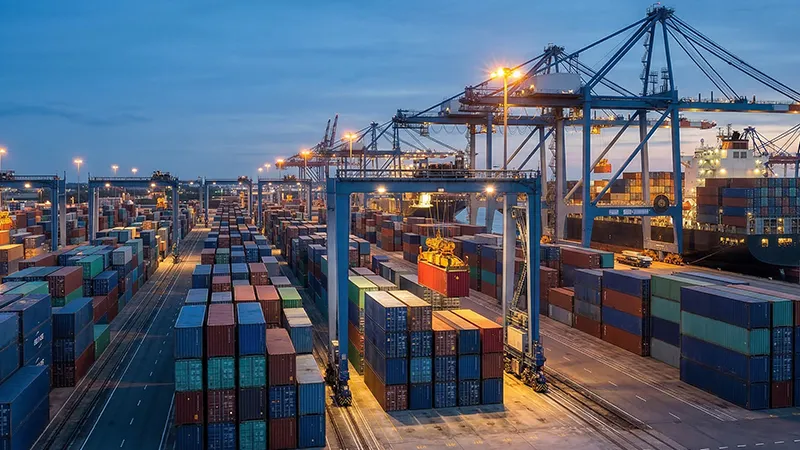
1.1 Rate Volatility: The 40GP Spike Nobody Warned You About
As of March 2026, FCL rates on the China–Canada transpacific corridor look like this, according to market date.
| Route | 20GP (USD) | 40GP (USD) | Est. Transit |
|---|---|---|---|
| Shanghai → Vancouver | $3,663 – $4,477 | $4,509 – $5,511 | 9–11 days (sea) / 25–35 days door |
| Shanghai → Montreal | $4,200 – $6,800 | $4,200 – $7,900 | 26–40 days |
| Ningbo → Toronto | $3,800 – $6,200 | $4,200 – $7,600 | 24–38 days |
| LCL (all routes) | ~$160 / CBM (March 2026) | 10–15 days sea leg | |
The 40GP rate climbed roughly 14% in a single month heading into Q1 2026. The primary driver is not a problem on the transpacific route itself, it is a global equipment redistribution ripple caused by the Strait of Hormuz closure. When vessels are rerouted globally, available container equipment tightens everywhere, including routes that never go near the Middle East. Air freight, by contrast, dropped approximately 30% year-over-year to around $4.40/kg, making it a viable option for small, high-value shipments right now.
1.2 Port Congestion: Vancouver Is Struggling, Prince Rupert Is Not
Wait times at the Port of Vancouver have increased by over 306% on a year-over-year basis, according to port congestion tracking data compiled. Labor disputes, terminal capacity limits, and post-CNY cargo surges all contributed. Prince Rupert, by contrast, remains significantly less congested and is increasingly the smarter default for China-origin shipments more on that in Section 3.
1.3 CARM: The Compliance Clock Has Run Out
The CBSA's CARM (Assessment and Revenue Management) system transition period ended on December 31, 2025. There are no more extensions, no more broker bond safety nets. Per CBSA Customs Notice 25-32, every commercial importer including Amazon sellers, small businesses, and non-resident importers must now have their own active CARM Client Portal account or their shipment will not be released without full upfront duty payment. This is covered in detail in Section 5.
2. FCL vs. LCL vs. DDP: Which Option Is Right for Your Shipment?
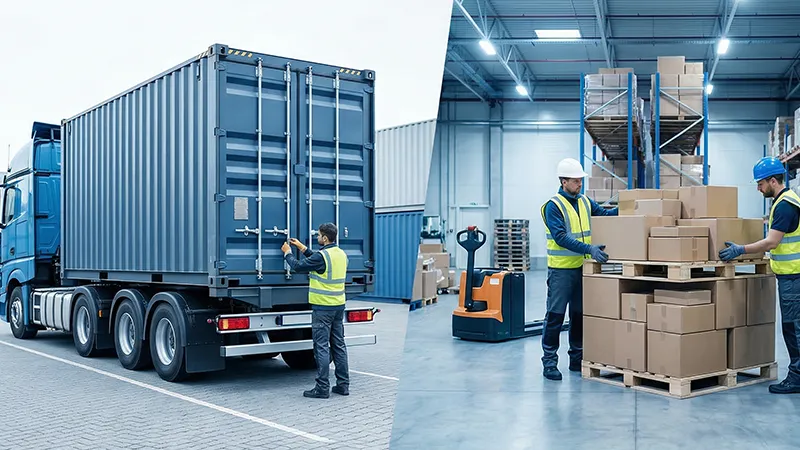
2.1 FCL (Full Container Load) — When It Makes Sense
FCL is straightforward: you book the entire container. No sharing, no CFS consolidation, lower per-unit cost at volume, and generally faster port processing because your container goes through customs as a single unit.
FCL is the right call when:
- Your cargo exceeds 15 CBM (see the decision threshold in Section 2.4)
- You need faster, more predictable transit (no CFS delays)
- You're shipping high-value goods where cargo damage risk from co-loading is unacceptable
- You have a reliable Canadian customs broker or CARM-compliant setup in place
2.2 LCL (Less than Container Load) — The Right Move for Smaller Shipments
LCL rates are currently around $160/CBM on the China–Canada lane. Your cargo is consolidated at origin with other shippers' goods, loaded into a shared container, and deconsolidated at a Container Freight Station (CFS) at destination before last-mile delivery.
LCL works well when:
- Your shipment is under 15 CBM
- You ship frequently but in small batches (lean inventory strategy)
- You want to test a new product before committing to a full container
- You need flexibility on lead times
Watch for: CFS handling fees at destination typically add $80–$120/CBM and are frequently missing from low-ball LCL quotes. Always ask for an all-in rate.
2.3 DDP (Delivered Duty Paid) — Convenient, But Only When Done Right
Under DDP, your freight forwarder handles everything: ocean freight, customs clearance, duty and tax payment, and final delivery to your door or warehouse. In theory, you just receive the goods. In practice, the DDP market is riddled with misleading practices, we cover the full risk breakdown in Section 4.
Zbao's DDP service for the China–Canada lane uses our own Importer of Record (IOR), pays all duties upfront with no hidden surcharges, and provides CARM-compliant documentation. That distinction matters, see Section 4.3 for the four questions you must ask any DDP provider.
2.4 The 15 CBM Decision Rule: FCL or LCL?
Here is a practical framework based on current 2026 market rates. This is not a hard rule, carrier mix, commodity type, and destination port all affect the final number, but it gives you a reliable starting point:
| Cargo Volume | Recommended Mode | Estimated Cost (China → Vancouver) | Note |
|---|---|---|---|
| Under 5 CBM | LCL | ~$800 – $1,200 all-in | FCL would mean paying for 95% empty space |
| 5 – 15 CBM | LCL (evaluate) | ~$1,200 – $3,000 all-in | Run a side-by-side quote at 14–15 CBM |
| 15 – 25 CBM | FCL 20GP | ~$3,663 – $4,477 all-in | Cost crossover point, FCL usually wins |
| Over 25 CBM | FCL 40GP | ~$4,509 – $5,511 all-in | Best per-CBM economics |
3. Which Canadian Port Should You Use? Vancouver, Prince Rupert, or Montreal?
3.1 Vancouver (Port Metro Vancouver) — Canada's Busiest, and Currently Its Most Congested
Vancouver remains Canada's largest container port by volume and has the widest selection of carrier services from China. However, 2026 has been difficult for Vancouver importers. Congestion data shows year-over-year wait time increases exceeding 300%. During peak periods, demurrage charges at Vancouver terminals start at approximately $150 CAD per day per container after the free time allowance (typically 5–7 days) expires.
Best for: British Columbia-based importers, Amazon FBA sellers sending to YVR-area fulfillment centers, shipments where carrier selection matters most.
Avoid during: Q4 peak season, immediately post-CNY (February–March).
3.2 Prince Rupert — The Most Underrated Port on the China–Canada Lane
Prince Rupert is 36 nautical hours closer to major Chinese ports than Vancouver, and the data on transit time reflects this. According to the Prince Rupert Port Authority, the port offers direct access to CN Rail's network, which connects to Toronto, Chicago, and major inland distribution hubs across Canada and the U.S. Midwest without transloading.
- Shanghai → Prince Rupert: approximately 12–19 days sea transit
- Shanghai → Vancouver: approximately 16–28 days sea transit
- Congestion levels significantly lower than Vancouver in 2026
- No cross-dock required for CN rail connections to eastern Canada
Best for: Time-sensitive cargo, FBA sellers restocking Ontario/Quebec fulfillment centers, furniture and bulky goods destined for the Canadian interior.
3.3 Montreal — Eastern Canada's First Choice
For importers distributing across Ontario, Quebec, or the Atlantic provinces, Montreal is often the most cost-efficient destination port. Rail connections to Toronto are direct and fast. The port handles both FCL and LCL cargo efficiently, though occasional inland rail scheduling delays have been reported in 2025–2026.
Best for: Eastern Canada distribution, Quebec-based retail importers, Montreal and Toronto FBA warehouse replenishment.
Port Selection Quick Reference
| Final Destination | Recommended Port | Typical Door-to-Door Transit |
|---|---|---|
| Vancouver / BC | Vancouver | 25–35 days |
| Calgary / Alberta / Saskatchewan | Prince Rupert → CN Rail | 28–38 days |
| Toronto / Ontario | Prince Rupert → CN Rail or Montreal | 32–44 days |
| Montreal / Quebec | Montreal | 35–50 days |
For a deeper Vancouver vs. Montreal breakdown, see our earlier guide: Sea Freight China to Canada: Vancouver vs. Montreal Port Comparison →
4. DDP vs. Traditional Sea Freight: What Canadian Importers Are Actually Experiencing
4.1 The Real Advantages of DDP — and Who It Actually Fits
When DDP is executed correctly, it solves a real problem. You negotiate a single all-in price, and your landed cost per unit is fixed before the shipment leaves China. There is no customs surprise, no duty invoice arriving three weeks after delivery, no CARM registration headache because the freight forwarder's IOR handles it. For first-time importers, small brands without a logistics team, or low-frequency shippers (three or fewer shipments per year), a legitimate DDP service genuinely simplifies the operation.
4.2 The Six DDP Traps That Are Costing Canadian Buyers Real Money
The problem is that "DDP" has become one of the most abused terms in Chinese freight forwarding. Based on documented complaints from r/Alibaba, r/logistics, and r/shopify, all posted between mid-2025 and early 2026. Here are the six most common issues:
- Fake DDP / DAP Bait-and-Switch: The agent quotes DDP but ships DAP, pocketing the duty estimate and leaving the buyer with a surprise customs bill or worse, uses the buyer's own business number as IOR without disclosure, creating legal liability for the buyer.
- Freight costs added to the commercial invoice value: When shipping costs appear on the commercial invoice, Canadian customs calculates duty on the total including freight. You end up paying tariff on logistics, not just goods.
- Battery / DG surcharges billed after the fact: Products containing lithium batteries or other regulated materials often trigger Dangerous Goods surcharges that are not disclosed at the time of quoting. The extra charge arrives after your shipment is already at origin.
- Volumetric weight arbitrage: Some agents quote DDP on a per-kg basis but bill on dimensional (volumetric) weight. Lightweight, bulky goods can end up costing 30–40% more than expected.
- Underestimated duties: Without proper HTS code verification before quoting, duty estimates can be materially wrong. One commonly cited example: a $120 product shipped DDP resulted in $64.20 in duties a 53% surcharge that erased the expected savings.
- CARM compliance risk under fake DDP: Under full CARM enforcement, the CBSA tracks the beneficial owner of goods not just the IOR on file. If your DDP agent's compliance documentation is incomplete, you as the cargo owner can still be subject to CBSA audit and back-assessment.
4.3 How to Identify a Legitimate DDP Provider: 4 Non-Negotiable Questions
- Do you use your own IOR for Canadian imports? (Answer must be yes)
- Does your DDP quote include all surcharges, including DG/battery fees? (Get it in writing)
- Is the commercial invoice kept separate from freight charges? (Prevents duty inflation)
- Can you provide CARM-compliant import documentation for our records? (Required for CBSA audit readiness)
Not sure whether DDP or LCL is right for your shipment? Tell us your cargo details and we'll give you a no-obligation recommendation usually within a few hours →
5. CARM in 2026: The Complete Compliance Guide for Importers Using Chinese Freight Forwarders
5.1 What CARM Is and Why It Changed Everything
CARM (CBSA Assessment and Revenue Management) is the Canada Border Services Agency's new digital system for managing commercial import accounting, duty payment, and release authorization. Its core shift: customs compliance responsibility has moved from your customs broker back to you, the importer. Every business importing commercially into Canada must now have its own active account in the CARM Client Portal (CCP) and must have posted their own financial security. Relying on your broker's bond is no longer an option.
5.2 The 5-Step CARM Registration Process
- Obtain a Canadian Business Number (BN9) from the Canada Revenue Agency, with an RM (Import/Export) program account activated. Foreign entities acting as Non-Resident Importers must also complete this step.
- Register your business in the CCP using either a Sign-In Partner (major Canadian bank account) or a GCKey government credential.
- Appoint a Business Account Manager (BAM) this must be an employee or officer of your company (owner, CFO, logistics manager). It cannot be delegated to a third-party agent.
- Digitally authorize your customs broker within the CCP. This is a critical step that catches many importers off guard: a paper Power of Attorney is no longer sufficient. Your broker cannot clear your goods until you accept their authorization request inside the portal.
- Post your Release Prior to Payment (RPP) security. The minimum financial security threshold is approximately $5,000 CAD. Without RPP, your goods must have all duties paid in full before CBSA releases them meaning your cargo sits at the port until funds clear.
For detailed CARM timelines and current enforcement status, refer to Dimerco's complete CARM guide for importers, which is regularly updated.
5.3 Non-Resident Importers (NRI): What U.S. and International Sellers Need to Know
If you are a U.S.-based Amazon seller expanding into Amazon.ca, or a Chinese supplier acting as the IOR, you fall under the NRI category. NRI registration in CARM follows the same five-step process but requires additional delegation setup. One significant benefit many NRIs miss: once registered, you can apply to recover the 5% GST paid on commercial imports a meaningful cash flow advantage for high-volume importers.
For the full FBA Canada / NRI / CARM intersection, read our dedicated guide: Amazon FBA Canada 2026: CARM, GST/HST & NRI Logistics →
6. Amazon FBA Sellers: How to Ship from China to Canadian Fulfillment Centers by Sea
6.1 LCL and FCL to Canadian Amazon FBA Warehouses
Amazon Canada's primary FBA fulfillment centers are located in the Greater Toronto Area (Ontario) and in British Columbia. For a full current list, see: The Complete List of Amazon FBA Warehouses in Canada →
For sea freight FBA shipments, the practical routing looks like this:
- BC-based FBA centers: Ship FCL or LCL to Vancouver, arrange last-mile drayage to the fulfillment center. Allow 35–45 days total door-to-FBA.
- Ontario-based FBA centers (GTA): Prince Rupert → CN Rail to Toronto is increasingly the faster option vs. Vancouver → cross-country trucking. Allow 38–48 days.
- LCL to FBA: Ensure your cartons meet Amazon's FBA labeling and packaging requirements before consolidation errors discovered at the Canadian CFS will delay delivery and may result in rejection at the FBA receiving dock.
6.2 Q2 2026 FBA Restocking Warning
Given current congestion at Ningbo (yard density above 90%, gate-in rejections reported in February 2026) and the Vancouver port situation, we strongly recommend FBA sellers building a 3–4 week buffer into their Q2 2026 replenishment timeline. Booking cargo for late April or May arrival should be initiated no later than early April.
7. The Hidden Costs of China-to-Canada Sea Freight (Most Quotes Leave These Out)
A low headline rate is easy to find. A complete landed cost is what matters. Here are eight charges that regularly appear on final invoices but are missing from initial quotes:
| Hidden Cost | Typical Range | Who Gets Caught |
|---|---|---|
| Destination CFS Handling (LCL) | $80 – $120 / CBM | All LCL shippers |
| Demurrage / Detention (Vancouver) | $150+ CAD / day / container | FCL shippers in peak season |
| DG / Battery Surcharge | $50 – $300+ / shipment | Electronics, e-bikes, power tools |
| ACI / eManifest Filing Fee | $30 – $75 / shipment | All modes Canadian equivalent of ISF |
| RPP Security (CARM) | ~$5,000 CAD one-time | New importers without existing security |
| Port Exam / CBSA Inspection | $250 – $1,500+ | First-time shippers, high-risk commodities |
| Incorrect HTS Code / Duty Differential | Varies can be 5–25% of cargo value | Importers without proper classification |
| Last-Mile / Drayage (Port → Warehouse) | $350 – $900 depending on distance | Anyone without a delivery-to-door quote |
The five questions to ask before accepting any quote:
- Does this rate include destination CFS charges (for LCL)?
- Does it include drayage to my final delivery address?
- Are DG / special cargo surcharges included or excluded?
- What are the free time allowances at destination, and what are the overage rates?
- Is customs clearance included, and does that include ACI filing?
8. Full Timeline: From Factory in China to Your Canadian Warehouse
Planning your supply chain means knowing every stage, not just the ocean leg. Here is a realistic full-cycle timeline based on current 2026 conditions:
| Stage | FCL (Shanghai → Vancouver) | LCL (Ningbo → Prince Rupert) | Notes |
|---|---|---|---|
| Factory production / cargo ready | Varies not included below | Allow 14–30 days for manufacturing | |
| Origin trucking + CY/CFS cut-off | 2–4 days | 3–5 days (CFS consolidation) | Book 5–7 days before vessel cut-off |
| Port waiting / vessel loading | 1–3 days | 1–3 days | Add 3–5 days buffer for Ningbo congestion in 2026 |
| Ocean transit (sea leg only) | 9–11 days | 12–16 days | Prince Rupert ~36 hours faster than Vancouver |
| Port discharge + terminal handling | 2–4 days | 3–5 days (deconsolidation at CFS) | Vancouver: add 3–5 days for congestion in peak periods |
| CBSA customs clearance | 1–3 days | 1–3 days | Pre-arrival documentation submission recommended |
| Drayage / last-mile delivery | 1–3 days | 1–3 days | Rail to Toronto adds 3–5 days from Prince Rupert |
| Total (realistic door-to-door) | ~35–45 days | ~28–40 days | Add buffer for Q2 2026 congestion |
For strategic guidance on avoiding peak-season shipping traps, see our freight market analysis: 5 Red Flags When Choosing a China Freight Forwarder →
The Bottom Line: Getting China-to-Canada Sea Freight Right in 2026
The fundamentals of sea freight have not changed. What has changed is the margin for error. CARM means customs compliance failures now result in held cargo, not just paperwork headaches. Vancouver congestion means a cheap quote to the wrong port can cost you more in demurrage than you saved on the ocean rate. And a fake DDP deal from an unverified agent can leave you legally exposed under the same CBSA system you thought you had delegated away.
The framework is straightforward: match your cargo volume to the right mode using the 15 CBM threshold, route to the right port based on your final destination, lock in CARM compliance before your first shipment, and work with a freight forwarder that operates on the China side not just the Canadian side.
Zbao Logistics handles DDP, LCL, and FCL shipping from all major Chinese origin ports Yantian, Shanghai, Ningbo, Guangzhou to Vancouver, Prince Rupert, and Montreal. We provide CARM-compliant documentation, FBA inbound prep, and transparent all-in pricing with no hidden surcharges.
Get your free China-to-Canada freight quote today we respond within 24 hours →


