US Furniture Tariffs 2026: Section 232 Impact & DDP Solutions
Ideally suited for: High-volume Furniture Importers, Cabinetry Wholesalers, and Amazon FBA Sellers managing oversize inventory.
If you are importing furniture from China to the United States, January 1, 2026, is not just the start of a new calendar year—it is a financial cliff that threatens to erase the profit margins of an entire industry.
The U.S. trade policy landscape has shifted dramatically. With the confirmed escalation of Section 232 tariffs, duties on key wood product categories—specifically Kitchen Cabinets and Bathroom Vanities—are set to double from 25% to a staggering 50%.
But the high duty rate is only the visible tip of the iceberg. Lurking beneath the surface are three hidden "financial killers" that most importers are unprepared for:
-
Retroactive Duties: The risk of CBP auditing past shipments and demanding millions in unpaid taxes years later.
-
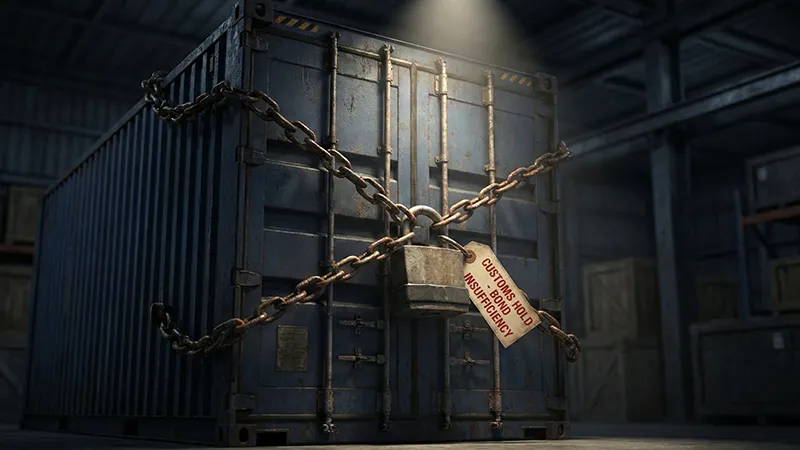
Bond Insufficiency: A technical liquidity trap that can freeze your supply chain overnight.
-
Criminal Liability: The DOJ's aggressive crackdown on "Transshipment Fraud" (using Vietnam or Malaysia to hide Chinese origin).
At Zbao Logistics, we don't just ship containers; we engineer financial safety for our clients. We have analyzed the latest policy updates, dissected real-world customs audit cases, and developed this comprehensive survival guide.
In this article, we will expose why traditional strategies like "Front-Loading" are failing and explain why Delivered Duty Paid (DDP) is the only logistics model that offers the cost certainty you need to survive 2026.
Part 1: The "Wood Shock" of 2026 – A Deep Dive into Policy
The era of stable trade relations and predictable low tariffs is officially over. For furniture importers, the new reality is defined by aggressive enforcement and "compounding" duties. You must understand exactly which of your products are in the crosshairs.
1. The 50% Tariff Wall (Section 232)
The most immediate threat comes from the expansion of Section 232 tariffs, which prioritize national security arguments to protect domestic timber and manufacturing industries. Verify the latest official tariff lists at the USTR Section 301 Investigations page.
-
Effective Date: January 1, 2026.
-
Affected Categories: The primary targets are Chinese-origin wooden cabinets, vanities, and related components falling under HTS 9403.40 (Wooden kitchen furniture) and HTS 9403.60 (Other wooden furniture).
-
The Escalation: Tariffs will jump from the current 25% to 50%.
The Financial Impact:
Imagine you are importing a 40HQ container of RTA (Ready-to-Assemble) kitchen cabinets with a commercial invoice value of $50,000.
-
In 2025: You pay $12,500 in Section 232 duties.
-
In 2026: You pay $25,000 in Section 232 duties.
This immediate $12,500 cash flow hit per container is enough to wipe out the net profit for many wholesalers operating on thin margins. And remember, this duty must be paid before the goods are released from the port.
2. The AD/CVD "Stacking Effect"
It is crucial to understand that Section 232 tariffs do not replace existing duties—they stack on top of them. The Anti-Dumping (AD) and Countervailing Duties (CVD) orders on Chinese wood products remain fully active.
-
Wooden Bedroom Furniture: Subject to a 198.08% China-wide rate (confirmed by the 2022 Sunset Review).
-
Wooden Cabinetry: Facing AD rates up to 262.2% and CVD rates up to 293.5%.
The Nightmare Scenario:
If you import a bedroom set that falls under both the AD order and the new Section 232 escalation, your cumulative duty liability could exceed 250% of the product value. For uncooperative manufacturers who failed the Department of Commerce reviews, the rates are punitive.
Zbao Insight: Many importers mistakenly believe their "Vietnam" supplier is safe. However, if that Vietnamese factory is using Chinese plywood or veneers, your goods may still be subject to these Chinese tariffs under the "Substantial Transformation" rule.
Part 2: The Hidden Killers – Retroactive Duties & CBP Audits
Many importers operate under the dangerous myth that "once the goods clear customs and leave the port, I am safe." This is false.
U.S. Customs and Border Protection (CBP) has a 5-year lookback period. They can audit your shipments years later and assess Retroactive Duties. If you are caught evading duties through transshipment or misclassification, the penalties are catastrophic.
To understand the risk, we must look at real-world precedents.
Case Study 1: The Transshipment Trap (BGI Group)
According to publicly available CBP EAPA case documents:
-
The Scheme: BGI Group, a Florida-based importer, purchased cabinets from a Vietnamese company ("HOCA Vietnam"). The paperwork claimed the goods were "Made in Vietnam."
-
The Reality: HOCA Vietnam was owned by a Chinese parent company. They were importing Chinese doors, drawers, and frames, and merely assembling them in Vietnam.
-
The Bust: CBP used the Enforce and Protect Act (EAPA) to investigate. They analyzed import data and found that HOCA Vietnam’s production capacity did not match their export volume.
-
The Penalty: CBP ruled that the goods remained of Chinese origin. BGI faced millions of dollars in retroactive AD/CVD duties (at rates of 59%-84%) for years of past shipments.
Case Study 2: The Misclassification Trap (Blue Furniture Solutions)
The Scheme: To avoid the 198% dumping duty on wooden bedroom furniture, this importer instructed their Chinese supplier to label the goods as "metal office furniture" or other non-subject categories on the commercial invoice.
The Bust: A competitor blew the whistle under the False Claims Act.
The Penalty: The company paid a $5.2 Million settlement. More importantly, the owners faced criminal charges for conspiracy to defraud the United States.
The Lesson for 2026:
CBP is using AI and data mining to flag anomalies. If your HS Code suddenly changes from "Wooden Furniture" to "Metal Furniture," or if your "Malaysian" supplier suddenly doubles their output without building a new factory, you will be flagged for an audit.
For a deeper dive into how to manage shipping complex items, read our guide on Shipping Oversize Cargo from China: Furniture & Auto Parts Guide.
Part 3: The "Bond Crisis" – Why Your Current Bond Isn't Enough
There is a technical financial risk that most freight forwarders fail to mention until your cargo is already stuck at the port: Customs Bond Insufficiency.
How the Trap Works
To import into the USA, you must post a Continuous Customs Bond. CBP regulations require this bond to cover at least 10% of your estimated annual duties, taxes, and fees.
The 2026 Liquidity Crisis Scenario:
-
Status Quo: You typically import $2 Million worth of furniture per year. With old tariffs, your duty liability was around $500,000. Your bond is set at **$50,000**.
-
The Trigger: On Jan 1, 2026, tariffs double to 50%. Your projected duty liability jumps to $1,000,000.
-
The Breach: Your required bond amount is now $100,000. Your current $50,000 bond is deemed "Insufficient."
-
The Freeze: CBP sends a "Notice of Insufficiency" and demands you increase your bond within days. Until you do, they stop clearing your cargo.
The Consequence: Demurrage Hell
Securing a larger bond (especially for high-risk commodities like furniture) takes time. Surety companies will demand audited financial statements and 100% collateral (cash) because the risk is so high.
While you scramble to find $100,000 in cash collateral, your containers sit at the Long Beach or Savannah terminal.
-
Demurrage Fees: $200 - $400 per container, per day.
-
Detention Fees: $150 - $300 per day.
We have seen importers lose their entire profit margin for the quarter simply because they didn't anticipate the need for a larger bond.
Mid-Article CTA: If you’ve ever received a ‘bond insufficiency’ notice or fear you might in 2026, talk to our customs team before your next shipment leaves China.
Learn more about bond types in our specific guide: Customs Bond Guide for Amazon Sellers (2025).
Part 4: Why "Front-Loading" & "Transshipment" Are Dangerous Advice
In response to the tariff hike, many traditional freight forwarders are offering two pieces of advice. Both are dangerous traps in the current environment.
Trap #1: "Front-Loading" (Ship Everything Now!)
The advice: "Rush to ship all your Q1 and Q2 inventory before Dec 31st to beat the tax."
Why it fails:
-
Cash Flow Suicide: Under FOB/DAP terms, you must pay the duties immediately upon arrival. Paying 6 months of duties in one week will destroy your operating cash flow.
-
Inventory Costs: You are moving the cost from "Tax" to "Storage." Warehouse rates in the US are at all-time highs.
-
Port Congestion: As everyone rushes to beat the deadline, ports like LA/LB get clogged. You risk paying Peak Season Surcharges (PSS) on freight that offset your tax savings.
Trap #2: "Transshipment" (The Vietnam Loophole)
The advice: "Ship the parts to Vietnam, assemble them, and label them Made in Vietnam."
Why it fails:
As seen in the BGI case, CBP is aggressively enforcing the "Substantial Transformation" rule. Simple assembly does not confer origin. If you follow this advice without a rigorous legal opinion, you are committing Customs Fraud. The risk is not just a fine; it is the seizure of your inventory and a permanent ban from importing.
Part 5: The Strategic Solution – Zbao DDP Service
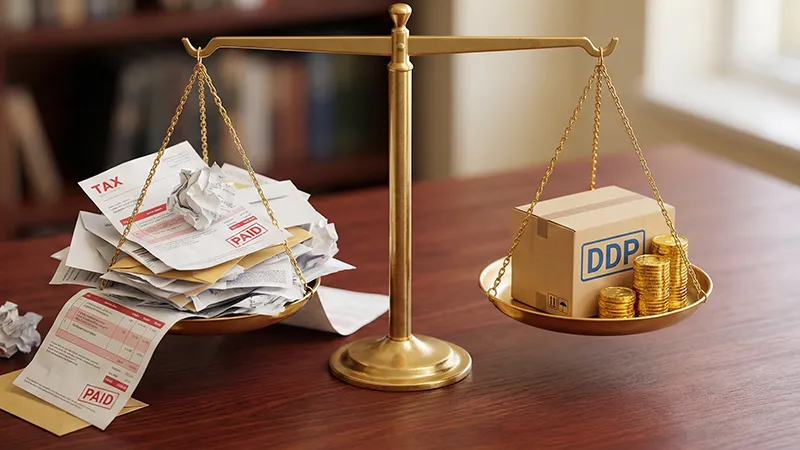
In a world of 50% tariffs, retroactive fines, and bond crises, how do you survive? The answer lies in shifting the risk away from your balance sheet.
Delivered Duty Paid (DDP) is more than a shipping term; it is a financial shield. At Zbao Logistics, our DDP service is engineered specifically for high-risk categories like furniture.
Summary: Compare Your Options
Which model protects your business in 2026?
| Strategy | Duty Risk | Cash Flow Impact | Compliance Risk | Best For |
| FOB / DAP | High (You pay all increases) | Negative (Pay duty immediately at port) | High (Audit & Bond risks are yours) | Large enterprises with deep capital |
| "Front-Loading" | Medium (Avoids hike, but pays congestion) | Severe (6 months of duty due at once) | Medium (Standard audit risk) | Panic buyers |
| "Transshipment" | Low (Short term) | Neutral | Extreme (Criminal liability & fines) | NO ONE |
| Zbao DDP | Locked (We absorb volatility) | Positive (Net 30 payment terms) | Shielded (We manage compliance) | FBA Sellers & SMEs |
Advantage 1: Cost Certainty (The "All-In" Price)
With Zbao's DDP service, we provide you with a fixed, final price per CBM or per Container that includes the duty.
-
The Old Way (DDU/FOB): You pay the supplier, then the freight, then the duty. If the tariff rate changes while the ship is on the water, you pay the difference.
-
The Zbao DDP Way: We lock your rate. If policy interpretation shifts or surcharges arise, we absorb the risk. You pay exactly what you budgeted, protecting your margins.
Mid-Article CTA: Want to see the real numbers Request a custom DDP vs. FOB cost comparison for your top SKUs.
Advantage 2: Risk Transfer (Bond & Audit Shield)
-
Bond Safety: Zbao acts as the Importer of Record (or utilizes our continuous bond network). You avoid the Customs Bond Insufficiency nightmare entirely.
-
Compliance Safety: Our in-house licensed customs brokers review your Lacey Act declarations and HTS classifications before the cargo leaves China. We ensure your paperwork matches the physical product, preventing the "Misclassification Trap."
Advantage 3: Cash Flow Optimization (The "Capital" Advantage)
This is the biggest hidden benefit.
-
Scenario: If you import $3M/year with average 30% duties, that’s **$900,000 in taxes**.
-
Standard Way: Under FOB, you prepay this cash immediately upon arrival.
-
Zbao DDP Way: We manage the duty payment. You pay us as part of the total freight invoice with Net 30 terms.
-
The Result: You effectively free up $75,000 – $150,000 of working capital at any given time to reinvest in inventory or marketing.
Read more about the fundamentals of this service in our article: What is DDP? Understanding DDP Shipping, Meaning, and Benefits.
Part 6: Action Plan for 2026 – Role-Based Checklist
To survive the 2026 tariff environment, you need to audit your supply chain immediately. Here is your roadmap based on your role:
Step 1: For CFOs & Buyers (Financial Audit)
-
Budget for 50%: Update your landed cost models for Q1 2026. If you stick with FOB, ensure you have the cash reserves for the duty spike.
-
Bond Review: Call your surety agent. Is your current bond limit sufficient for a $1M duty liability year?
Step 2: For Logistics Managers (Compliance Audit)
-
HTS Check: Work with a broker to review your product classifications. Ensure you aren't accidentally using a code that triggers the 198% Antidumping rate.
-
Lacey Act / PPQ 505: Ensure your supplier provides the genus, species, and harvest country for all wood components. This is mandatory for entry.
Step 3: For Amazon FBA Sellers (Strategy Shift)
-
Switch to DDP: Your cash flow is tight. Don't let duty payments freeze your ability to restock. Let a professional logistics partner take the compliance and financial heat.
Step 4: Lock in Rates Early
With the tariff hike effective Jan 1, shipping rates will spike in late December. Secure your booking now.
For general rate trends, consult our forecast: Shipping from China to the USA in 2025: Rates & Tariffs.
Part 7: FAQ – Common Questions on 2026 Furniture Tariffs
Q1: What is the specific tariff rate on Chinese kitchen cabinets in 2026?
Starting January 1, 2026, the Section 232 tariff on Chinese-origin wooden cabinets and vanities increases to 50%. This is in addition to any applicable Antidumping (AD) and Countervailing Duties (CVD), which can combined exceed 250% for certain manufacturers. Zbao Logistics can help you calculate your exact total landed cost.
Q2: Can I avoid tariffs by shipping furniture components for assembly in the USA?
It depends. CBP applies the "Essential Character" rule. If you ship a "kit" that contains all the parts to build a cabinet (doors, frames, panels), it is classified as a finished cabinet and subject to the full duty. Contact Zbao's compliance team for a ruling review.
Q3: What happens if my Customs Bond is insufficient?
If your bond cannot cover the increased duty liability, CBP will issue an "Insufficiency Notice." You will be unable to clear any new shipments until you post a larger bond (often with 100% cash collateral). With Zbao's DDP service, we manage the bond requirements, shielding you from these unexpected delays.
Q4: Is it safe to source from Vietnam to avoid Section 301/232 duties?
Only if the factory is legitimate. If the Vietnamese factory is merely assembling Chinese components, CBP will view this as "Transshipment" and apply Chinese duties (plus penalties). Zbao Logistics advises rigorous factory audits or compliant DDP shipping to mitigate this risk.
Conclusion: Don't Gamble with Your Supply Chain
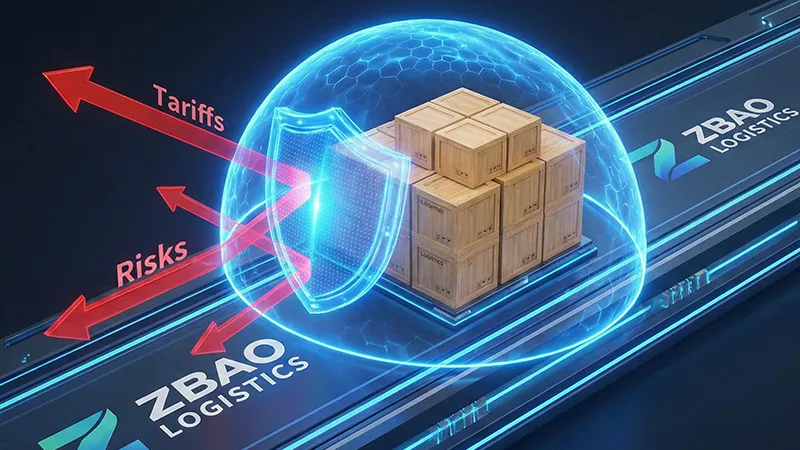
The 2026 tariff hikes are designed to punish importers who rely on "business as usual." The risks of retroactive fines and bond failures are real, and they are business-ending events.
You have two choices:
-
Navigate the minefield of bond requirements, audits, and cash flow crunches alone.
-
Partner with Zbao Logistics to stabilize your costs.
Our DDP Service is the "Financial Shield" you need. We handle the duties, the bonds, and the compliance, leaving you with a single, predictable price and the freedom to focus on growing your sales.
Ready to Secure Your 2026 Supply Chain?
👉 [Contact Zbao Logistics Today]
Get a free "Furniture Duty Impact Analysis" and see exactly how our DDP solution can save your margin.


