Sea Freight China to Canada: Vancouver vs Montreal Guide
Unlike shipping to the US, sea freight from China to Canada is a "rail game." Since a vast majority of goods landing in West Coast ports must move by rail to reach Toronto or Montreal, the ocean voyage is only half the battle.
In 2026, blindly choosing the Port of Vancouver can lead to unexpected delays. Recent data from [See: RailState] indicates that rail dwell times can exceed 7 days during peak season, turning "fast" shipments into logistical nightmares.
So, which route is best for your business? This guide compares the "Big Three" entry points—Vancouver, Prince Rupert, and Montreal—to help you optimize for speed, cost, and reliability.
Route 1: Port of Vancouver – The Default Choice
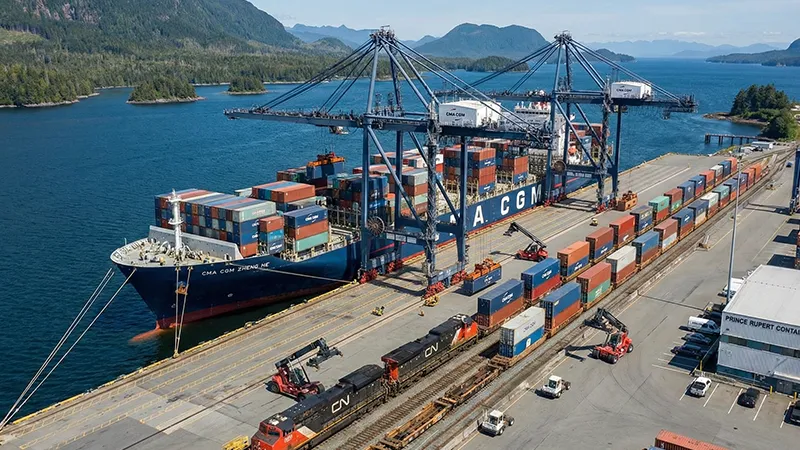
As Canada's largest port, Vancouver is the default gateway for most freight forwarders. It offers the most vessel options from China and direct trucking access to Western Canada.
-
Best For: Importers shipping to Calgary, Edmonton, or those with flexible timelines to Toronto.
-
The 2026 Risk: Congestion. According to Everstream Analytics (Jan 2026), vessel waiting times fluctuate significantly. If CN/CP Rail networks get clogged, containers can sit at the terminal for over a week before moving inland.
-
Zbao Strategy: We monitor rail dwell times daily. If Vancouver is backed up, we reroute via Prince Rupert.
[Get a Free Route Consultation]
Route 2: Port of Prince Rupert – The "Express" Alternative
Located 500 miles north of Vancouver, Prince Rupert is the closest North American port to Asia. It is designed specifically for speed, bypassing the urban congestion of Vancouver.
-
Best For: Urgent shipments to Toronto, Chicago, or Amazon FBA Ontario.
-
The Advantage: It features a dedicated rail line that avoids major bottlenecks. The
[See: Prince Rupert Port Authority]reports that their dwell times are often 30-50% lower than Vancouver's during peak seasons. -
The Trade-off: Capacity is lower. You must book space at least 3 weeks in advance.
Route 3: Port of Montreal – The East Coast Strategy
Shipping directly to Montreal via the Panama Canal is an "all-water" strategy that avoids West Coast rail risks entirely.
-
Best For: Importers located in Quebec or East Coast distributors who want 100% schedule certainty.
-
The 2026 Risk: Winter ice. The St. Lawrence Seaway is subject to seasonal restrictions. Additionally, labor reliability at the Port of Montreal has been variable according to recent Kuehne+Nagel updates.
Data Showdown: Cost vs. Transit Time (2026)
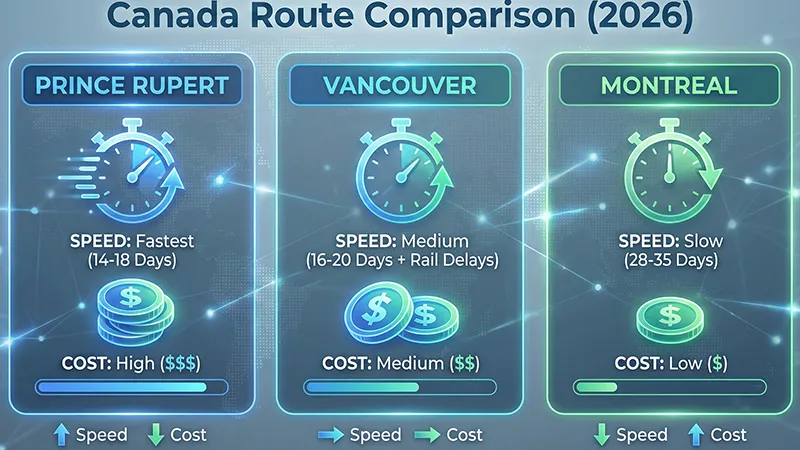
Which route wins for a standard shipment to Toronto?
| Route (To Toronto) | Est. Sea Time | Est. Rail/Truck | Total Time | Cost Level | Risk Factor |
| Via Vancouver | 16-20 Days | 7-12 Days | ~28 Days | $$ | High (Rail Congestion) |
| Via Prince Rupert | 14-18 Days | 4-7 Days | ~23 Days | $$$ | Medium (Capacity) |
| Via Montreal | 28-35 Days | 2-4 Days | ~35 Days | $ | High (Ice/Winter) |
Note: Transit times are estimates based on 2026 carrier performance.
Step-by-Step: How to Ship from China to Canada
Shipping to Canada involves specific regulatory hurdles. Follow this 5-step process to ensure a smooth delivery:
-
Choose Your Incoterms: Decide between FOB (you handle freight) or DDP (forwarder handles everything). For Amazon FBA, DDP is strongly recommended to avoid GST issues.
-
Select the Right Port: Based on the comparison above, choose Vancouver for cost or Prince Rupert for speed.
-
Prepare Documentation: Ensure your supplier provides a valid Canada Customs Invoice (CCI).
-
Clear Customs (CBSA): Your freight forwarder submits the ACI (Advance Commercial Information) 24 hours before loading.
-
Final Delivery: Goods are moved via CN/CP Rail to an inland depot (e.g., Brampton, ON) and trucked to your warehouse.
Essential Documents Checklist for Canada Customs
To avoid CBSA exam fees, ensure you have these documents ready before the ship departs:
-
Commercial Invoice: Must list the country of origin and currency (USD or CAD).
-
Packing List: Accurate weight and dimensions are crucial.
-
Bill of Lading (BOL): The master shipping document.
-
Canada Customs Invoice (CCI): Required for shipments valued over CAD $2,500.
-
Certificate of Origin: Needed to claim preferential tariffs if applicable.
Hidden Costs in Canada: Demurrage & Exam Fees
When calculating shipping from China to Canada, base freight is just the start.
-
Demurrage & Detention: Carriers like ONE Line updated their tariffs in 2025. You now pay significantly more for containers stuck at the terminal.
-
CBSA Exam Fees: The Canada Border Services Agency (CBSA) conducts random inspections. If selected, you pay for the exam and the delay.
[See: CBSA Import Guide] -
Rail Fuel Surcharges: Often added after the quote by generic brokers.
The Solution: Use DDP Shipping. Zbao Logistics offers an all-inclusive rate that covers freight, duty (GST/HST), and delivery. We act as your Non-Resident Importer (NRI), handling all CBSA compliance. [See: Learn about our DDP Canada Service]
Frequently Asked Questions (FAQ)
Which port is faster for shipping from China to Toronto?
Prince Rupert is often faster. Its northern location saves 1-2 days of sea transit, and its dedicated rail connection to Toronto avoids the frequent congestion found in Vancouver.
What is the cheapest way to ship to Canada FBA?
For most sellers, sea freight to Vancouver combined with rail consolidation is the most cost-effective. Using a DDP service ensures you don't get hit with unexpected GST bills upon arrival.
What documents are required for shipping to Canada?
You strictly need a Commercial Invoice, Packing List, Bill of Lading, and a Canada Customs Invoice (CCI) for goods over $2,500. Missing the CCI is the #1 cause of border delays.
Does Prince Rupert freeze in winter?
No. Despite its northern location, Prince Rupert is the deepest ice-free natural harbor in North America, making it a reliable year-round option.
Who This Guide Is For
This guide is specifically designed for B2B importers shipping 5+ containers per year or sellers managing Amazon FBA distribution in Canada who require consistent, duty-paid logistics solutions.
Conclusion: Choosing the Right Port
In 2026, the "best" port isn't always the cheapest—it's the one that keeps your supply chain moving.
-
Need speed to Toronto? Choose Prince Rupert.
-
Need low cost to Calgary? Choose Vancouver.
-
Need certainty to Quebec? Choose Montreal.
At Zbao Logistics, we don't just book space; we plan routes based on real-time rail data.
Ready to optimize your Canada supply chain?
[👉 Get a Custom Quote for Canada Shipping]


