Shipping from Yantian to the US West Coast: Routing, Terminals & Risks (2026)
Most routing guides will tell you that shipping from Yantian (Shenzhen) to Los Angeles takes "about 16 days."
They are missing the most important operational detail.
In 2026, experienced logistics operators know that the real differentiator is not just the ocean transit time, but the terminal efficiency. Choosing the wrong carrier service loop could mean your container lands at a congested manual terminal with 90-minute wait times, instead of an automated facility with 40-minute turn times.
This guide provides a neutral, in-depth analysis of the Yantian-to-West Coast trade lane, helping shippers optimize for speed, cost, and risk avoidance.
Part 1: The "Speed Strategy" – OOCL & The Automated LBCT
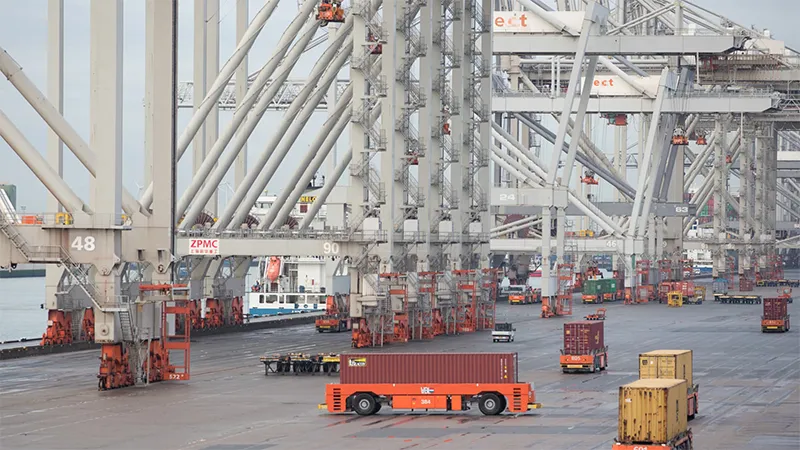
For high-turnover goods (Electronics, Fashion, FBA), speed is the priority. While Matson remains the fastest option, the market has identified a "High-Efficiency Alternative" that balances speed with capacity: OOCL (PVCS Service).
The Terminal Advantage: LBCT
OOCL's primary advantage is its ownership of the Long Beach Container Terminal (LBCT). Unlike generic "Ocean Alliance" slots that might dock anywhere, the PVCS service consistently calls at LBCT.
-
Automation: It is the most advanced, fully automated terminal in North America.
-
Truck Fluidity: Average truck turn times are ~40 minutes (Industry average is 80+ minutes).
-
Equipment: Consistent chassis availability, even during peak congestion.
The "Priority" Factor
Shippers with access to OOCL-recognized priority loading status (commonly referred to in the industry as "A-Pass" or Prime) receive protection against rolling. This tier is essential for maintaining supply chain velocity during pre-CNY or Peak Season weeks.
Operational Note: Shippers should verify with their forwarder whether their booking is on the PVCS loop (LBCT) or a shared slot on a COSCO vessel docking at WBCT (West Basin), where drivers often face significantly longer wait times.
Part 2: The "Northern Route" – Canada (Vancouver/Prince Rupert)

For years, routing via Vancouver (YVR) or Prince Rupert (PRR) was the standard strategy to utilize Section 321 (Type 86) for duty-free entry into the US.
In 2026, the risk profile of this route has shifted.
1. The Rail Bottleneck
-
Vancouver (Deltaport): Currently facing intermittent 8-10 day rail dwell times due to CPKC network congestion.
-
Prince Rupert: Generally offers better fluidity (5-7 days), but is susceptible to winter weather delays in Q1.
2. The Regulatory Environment
-
US Customs (CBP) has increased scrutiny on "Type 86" shipments entering via Canada and Mexico.
-
Operational Risk: Shipments routed this way are seeing a higher frequency of "Customs Holds" at the border compared to direct US entry.
Verdict:
While this route remains viable for low-duty, non-time-sensitive SKUs where cost is the only factor, shippers must account for potential rail and customs delays in their lead time planning. For urgent inventory, the direct US West Coast route is currently more predictable.
Part 3: Accessing "Tier 1" Pricing & Capacity
For mid-sized shippers (50-500 TEU/year), accessing the same rates and priority status as mega-retailers is the primary challenge.
Understanding Contract Structures
There are two primary ways to book these vessels:
-
Standard Spot Market: Subject to bi-weekly "General Rate Increases" (GRI) and lower loading priority.
-
Named Account (NAC) Filing: A mechanism where an NVOCC files the shipper as an affiliate under a master service contract.
The NVOCC Advantage
Partners like Zbao Logistics utilize FMC-compliant Named Account filings to extend "Tier 1" benefits to qualified shippers.
-
Pricing Stability: Access to Ocean Freight (FCL) fixed or index-linked rates that are insulated from short-term GRI spikes.
-
Allocation Protection: Access to carrier-recognized priority tiers (like OOCL's A-Pass) typically reserved for BCOs moving 1,000+ TEUs.
-
No MQC Penalties: Unlike direct carrier contracts, managed NVO contracts often remove the risk of "Dead Freight" penalties for volume shortfalls.
Part 4: 2026 Carrier Service Comparison
| Carrier | Service Code | Terminal | Truck Turn Time | Best Use Case | Zbao Access Level |
| OOCL | PVCS | LBCT (Auto) | ~40 Mins | Speed / FBA | Tier 1 (A-Pass) |
| COSCO | SEA / CEN | PCT / LBCT | ~70 Mins | Bulk / Heavy | Tier 1 (NAC) |
| Evergreen | HTW | ETS (Manual) | ~90 Mins | Cost Savings | Fixed Rate |
| Matson | CLX | C60 (Exclusive) | ~25 Mins | Emergency | Premium Spot |
FAQ: Yantian to US West Coast Routing
Q: What is the fastest shipping route from Yantian to Los Angeles?
A: Excluding air freight, the fastest ocean route is Matson CLX (10-12 days). The fastest "standard" container service is OOCL PVCS docking at LBCT (approx. 14-15 days), which offers near-premium speed at a lower cost.
Q: Is shipping to Vancouver still cheaper for Section 321 duty savings?
A: Yes, it is generally cheaper for duty savings, but in 2026 it carries higher operational risks. Rail delays at Vancouver (Deltaport) can add 8-10 days to transit time, and CBP is increasing inspections on Type 86 entries from Canada.
Q: Why does the terminal matter for ocean freight?
A: The terminal determines how fast your cargo leaves the port. Automated terminals like LBCT have truck turnaround times of ~40 minutes, whereas manual terminals like ETS or WBCT can take 90+ minutes, leading to higher drayage costs and delays.
Q: How can I get Tier 1 shipping rates without a large volume?
A: Mid-sized shippers can access Tier 1 rates by working with an NVOCC that uses Named Account (NAC) filings. This allows you to "piggyback" on the NVOCC’s master contract volume while maintaining full compliance.
Optimize Your 2026 Supply Chain
Don't let terminal congestion become your bottleneck. Whether you need the speed of LBCT or the cost-efficiency of COSCO, we can structure the right contract for you.
Get a Precision Quote from Zbao
-
Route: Yantian → LBCT (OOCL)
-
Rate Structure: Tier 1 Contract (FMC Compliant)
-
Speed: 14 Days Port-to-Port
Check Your Rate Eligibility – Upload your volume forecast to see if you qualify for Tier 1 access.


