Freight Outlook 2026: Low Rates, High Risks
If you are negotiating your 2026 logistics contracts based solely on "falling ocean rates," you are preparing for the wrong war.
The data for 2026 is contradictory. On the surface, it looks like a shipper's market: new vessels are flooding the ocean, and spot rates are predicted to drop significantly.
But digging deeper into the supply chain reveals a different reality. The savings you see on the ocean bill will likely be wiped out by three silent killers:
-
Operational Chaos (Massive Blank Sailings).
-
The "China+1" Logistics Trap (Vietnam/India inefficiencies).
-
The "Last Mile" Squeeze (Rebounding US trucking costs).
At Zbao Logistics, we don't just move freight; we analyze the macro trends that impact your bottom line. Here is our unfiltered outlook for 2026.
1. The Ocean Forecast: The "Oversupply" Illusion
The Data:
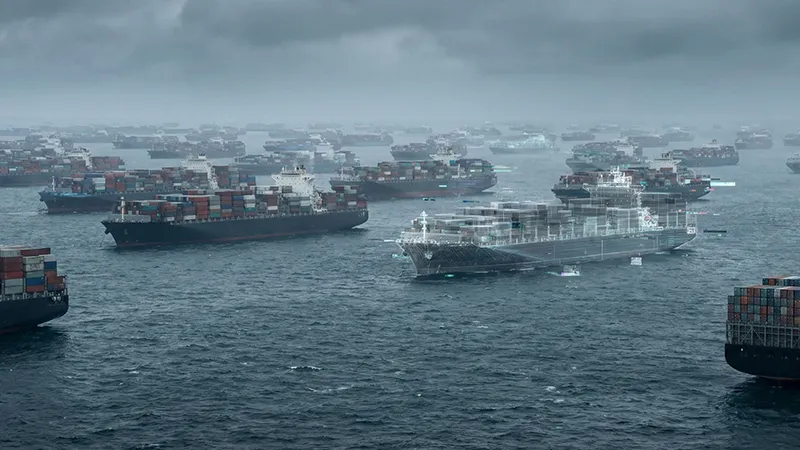
According to Alphaliner and Drewry, global container capacity will surge by 3.8% – 4.6% in 2026 due to a record delivery of 1.7M TEU in new vessels. Meanwhile, North American demand is projected to be flat or negative.
The Result:
Logic suggests rates should crash. Market analysts predict a significant drop in spot rates. But carriers will not let rates hit rock bottom without a fight.
The 2026 Reality: "Artificial Instability"
To artificially prop up rates, carriers will aggressively use Blank Sailings (void sailings).
-
Prediction: Expect 15–20% of scheduled sailings to be cancelled abruptly, especially post-CNY.
-
The Risk: You might get a cheap rate, but your cargo will be "Rolled" (delayed) by 2 weeks.
-
Strategy: Do not lock 100% of your volume into low-cost fixed contracts. Keep 30% on the spot market or premium services (like Matson CLX) to ensure your goods actually move during blank sailing waves.
2. The "China + 1" Myth: Why You Should Stay Put
In 2026, the pressure to "de-risk" from China is high. But for small-to-mid-sized sellers, moving production to Vietnam or India is often a financial suicide mission.
The "Raw Material Loop" Trap
Our 2025 data shows a surge in Chinese exports of components to Vietnam.
-
Translation: Your factory is in Vietnam, but the raw materials still come from China.
-
The Cost: You now pay for two shipping legs (China → Vietnam → USA). The logistics friction wipes out any tariff savings.
The "Cash Flow" Killer
-
China to US West Coast: ~11-14 days (Fast Boat).
-
India/Vietnam to US West Coast: ~35-50 days (Standard).
-
Impact: Moving out of China slows your Cash Conversion Cycle by 3x. Can your business afford to tie up capital for 2 extra months?
Infrastructure Reality Check
While China's ports operate with robotic efficiency, Vietnam's Cat Lai and India's Nhava Sheva continue to face infrastructure bottlenecks.
Zbao Verdict: Unless you are Apple or Nike, "Optimizing China" (better consolidation, smarter routing) is far more profitable than "Exiting China."
3. The Real Risk in 2026: The "Last Mile" Squeeze
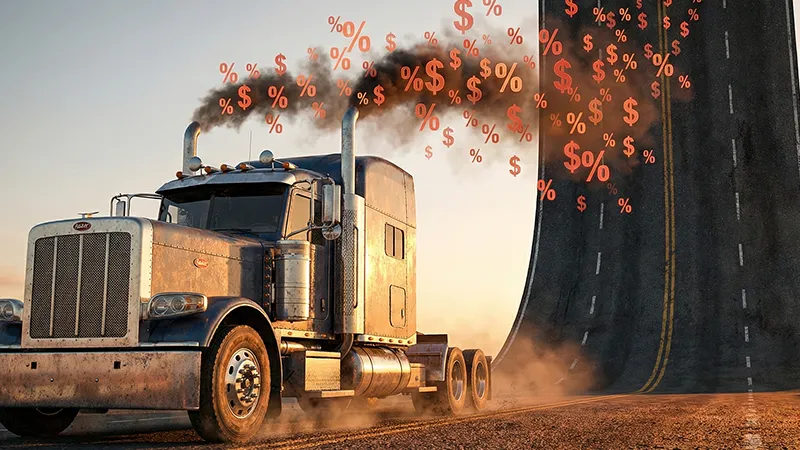
While you are celebrating cheap ocean freight, the US domestic market is preparing to take that money back.
Trucking Rates to Rebound
After a 2-year recession, the US trucking market is experiencing a "Capacity Shakeout" (see FTR Intelligence forecasts).
-
What it means: Many budget truckers went bankrupt in 2024/2025. The surviving carriers have pricing power again.
-
Forecast: Expect LTL and Drayage rates to rise by 8-12% in 2026.
Amazon's 2026 Fee Structure
Amazon is continuing its war on "inefficient inventory."
-
Inbound Placement Fees: Will increase for sellers who refuse to split shipments.
-
Aged Inventory Surcharge: The window before fees kick in is shrinking.
-
Strategy: You must use a 3PL Warehouse to act as a buffer. Drip-feed inventory into FBA to keep your IPI score high and storage fees low.
Summary: How to Win in 2026
The year 2026 will not be about "finding the cheapest rate." It will be about reliability.
| If you rely on... | The 2026 Risk is... | The Zbao Solution |
| Cheap Ocean Contracts | Rolling / Blank Sailings | Mix in Matson/EMC for critical SKUs. |
| Vietnam/India Sourcing | 50-Day Transit Times | Stick to China but use Section 321 for duty savings. |
| Direct-to-FBA Shipping | High Storage/Placement Fees | Use a US 3PL Buffer strategy. |
FAQ: Navigating the 2026 Freight Market
Q: Is freight really cheaper in 2026?
A: Ocean rates are lower due to vessel oversupply, but your Total Landed Cost might increase. The savings on sea freight are being offset by rising US trucking costs (Last Mile) and increased Amazon FBA fees. Focus on "Total Cost," not just the ocean rate.
Q: Should I move my sourcing to Vietnam to avoid risks?
A: For most SMB sellers, no. The "China+1" strategy often introduces hidden costs: longer transit times (50+ days), raw material shipping costs from China, and port congestion. Optimizing your China supply chain is usually more profitable than relocation.
Q: How can I avoid "Blank Sailings" delays?
A: Diversify your carrier mix. Don't put 100% of your cargo on the cheapest carrier, as they are the most likely to "roll" your cargo. Allocate 20-30% of your volume to premium expedited services like Matson CLX, which rarely cancels sailings.
Q: Is a US 3PL still worth it in 2026?
A: Yes, more than ever. With Amazon raising "Aged Inventory Surcharges" and "Placement Fees," using a 3PL as a buffer allows you to store goods cheaply and drip-feed them into Amazon, avoiding thousands in penalties.
Q: What is the biggest risk for shippers in 2026?
A: Unreliability. With carriers managing capacity through blank sailings, the biggest risk is not "high prices" but "cargo getting stuck." Inventory planning must account for a standard deviation of 7-10 days in arrival times.
Final Thought
The era of "set it and forget it" logistics is over.
If your logistics partner is still selling you "cheap rates" in 2026, they are not managing your risk — they are transferring it to you.
Planning your 2026 Logistics Strategy?
[Book a Strategy Call with Zbao] – Let’s audit your route and protect your margins before the new year starts.


