BCO vs. NVO Contracts: Why "Going Direct" is a Trap
Quick Answer: What is the difference between BCO and NVO contracts?
A BCO (Beneficial Cargo Owner) contract is a direct agreement between a shipper and a carrier, requiring strict volume commitments and carrying hidden penalty risks. An NVO (Non-Vessel Operating Common Carrier) contract is a flexible agreement via a logistics partner (like Zbao) that offers competitive "Tier 1" rates without the risk of "Dead Freight" penalties or service ghosting.
It is January 2026. The "Contract Season" for Trans-Pacific freight is heating up.
Every ambitious Amazon seller and Logistics Director asks the same question:
"Should we stop using a forwarder and sign a direct contract with Maersk or COSCO?"
On paper, "going direct" seems like the path to the lowest price.
But reality tells a different story. In 2026, with Oversupply looming and carrier service levels dropping, our experience suggests that for the vast majority of mid-sized shippers, signing a direct BCO contract introduces more operational risk than cost savings.
At Zbao Logistics, we offer a third option: The Managed BCO Access Model. This guide explains why "Service & Flexibility" beats "Fixed Rates" in the 2026 market.
1. The Pricing Trap: Spot Rates Will Fall Below Contracts

If you sign a fixed BCO contract today, you are betting against the market.
Data from Xeneta predicts that 2026 Spot Rates will drop by 25% due to vessel oversupply.
The "Inversion" Risk:
-
Scenario: You sign a direct contract at $2,200/FEU.
-
Reality: By June 2026, the spot market drops to $1,500/FEU.
-
The Trap: Your contract forces you to pay $2,200. If you try to book spot, the carrier charges you "Dead Freight" penalties for missing your volume commitment.
-
The Loss: You overpay by $700 per container.
2. The "Ghosting" Problem: Real User Horror Stories
We analyzed hundreds of discussions on Reddit and Amazon Seller Forums. The consensus is clear: Small BCOs are treated like second-class citizens.
Case Study: The "Maersk Visibility Trap" (2025)
A European shipper with a direct contract confirmed a delivery date of Sept 11. The vessel didn't arrive until Sept 20.
-
The Carrier's Response: No notification. Zero updates.
-
The Cost: When the shipper complained about storage fees, the carrier replied: "It's your duty to track the cargo."
-
The Lesson: Unless you ship 5,000+ TEUs, you do not get a dedicated account manager. You get a general email address that takes 5 days to reply.
3. The "Blank Sailing" Shield
2026 will see carriers cancelling voyages (Blank Sailings) to fight low rates.
Direct Contract Risk:
Carriers explicitly state that blank sailings are "normal operational events."
-
If Maersk cancels your Week 15 sailing, your cargo waits for Week 17. You have no recourse.
-
Industry reports from 2025 indicate that significant numbers of Amazon sellers lost the "Buy Box" due to stockouts caused by these direct-carrier delays.
Zbao NVO Protection:
We don't rely on one carrier.
-
Multi-Carrier Strategy: We hold contracts with Maersk, MSC, and COSCO.
-
Substitution: If one carrier blanks, we instantly rebook you on another.
-
Result: 90%+ On-Time Performance vs. 70% for direct small BCOs.
4. The Solution: Zbao's "Managed NAC" Model
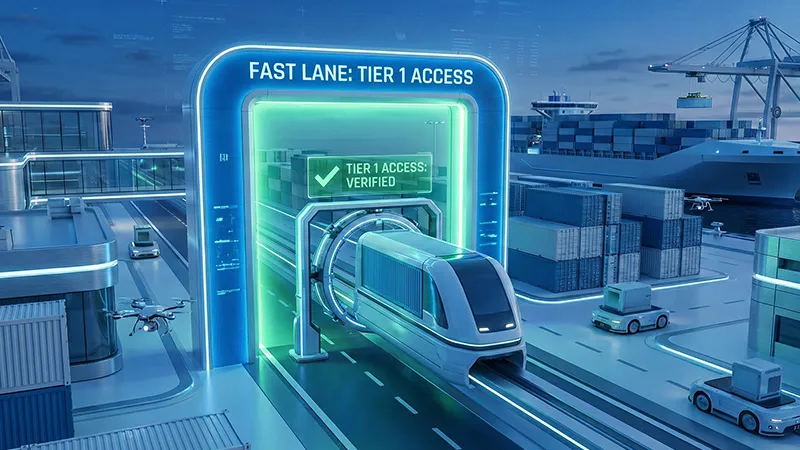
We use a sophisticated mechanism called the Named Account (NAC) to give you the best of both worlds.
How It Works:
-
Legality: We file your company as a "Named Account" under our Master Service Contract, in full compliance with FMC regulations (46 CFR § 531.6). This structure is widely accepted by Tier-1 carriers and is the industry-standard mechanism large NVOs use to extend contract benefits to qualified shippers.
-
Pricing: You get access to our Tier 1 Bulk Rates (usually $1,500 - $1,800 range).
-
Flexibility: We offer Volume Floors instead of hard caps. You never pay a penalty for shipping less during slow season.
-
Hybrid Pricing: We use an Index-Linked model. If the market drops, your price drops. You are never "locked in" to a high rate.
Comparison: Direct BCO vs. Zbao Managed Model
| Feature | Direct BCO Contract (You vs. Carrier) | Zbao Managed NAC Model |
| Pricing | Fixed (High risk of overpaying) | Hybrid (Market Adaptive) |
| Customer Service | "Self-Service" Portal | Dedicated Account Manager |
| Blank Sailing Risk | High (No backup option) | Low (Multi-carrier backup) |
| MQC Penalty | $1,000/FEU (Strict) | $0 (Flexible) |
| Compliance | You manage ISF/Demurrage | We handle ISF & Disputes |
FAQ: Making the Right Choice
Q: Is it legal to use a Named Account (NAC)?
A: Yes. It is a fully regulated mechanism under the FMC. Your company name appears on the Bill of Lading, ensuring full compliance for customs and tax purposes.
Q: I am an Amazon Seller. Why is this better for me?
A: Amazon sellers have volatile volume. A direct contract punishes you for low volume in Q1. Zbao's model absorbs that fluctuation, giving you Tier 1 rates without the Tier 1 commitment.
Q: Do you handle ISF filing?
A: Yes. Direct carriers do NOT file ISF. If you miss the deadline, CBP fines you $5,000. Zbao includes ISF filing as part of our standard service, eliminating this risk.
Stop Playing "Small Fish" in a Big Pond
You don't need to sign a dangerous contract to get a good price. You just need the right partner.
Switch to a Zbao Managed NAC Contract for 2026.
[Check Your Rate Eligibility] – See if your volume qualifies for our Tier 1 program.


