Amazon Global Logistics (AGL) vs. Private Freight Forwarder: The 2026 Honest Review
⚡ 2026 Quick Verdict: Is AGL Cheaper?
Q: Is Amazon Global Logistics cheaper than a private forwarder?
A: For LCL shipments under 20 CBM, private DDP forwarders are typically 15-25% cheaper when you include AGL's hidden fees like customs exams ($150–$400), amendment fees ($100–$500), and mandatory bond purchases. AGL only becomes cost-effective for high-volume sellers shipping 50+ CBM per month who have their own compliance teams.
Key Data Point: In our 2025 sample analysis, foreign sellers using AGL reported roughly 2–3x more customs exams compared to Zbao's DDP clients due to IOR targeting. [Source: 2025 Seller Forum Data Analysis]
Introduction: The "Low Price" Trap in a Volatile 2026
As we navigate the logistics landscape of 2026, Amazon FBA sellers are operating in an environment of unprecedented margin compression. Advertising costs are rising, competition is fiercer, and supply chain volatility has become the new normal. In this context, minimizing landed costs is not just a strategy—it is a survival mechanism.
When you log into Seller Central and see an Amazon Global Logistics (AGL) ocean freight quote that is 20% lower than the market average, it feels like finding a lifeline. The promise is seductive: seamless integration, official Amazon backing, and rock-bottom base rates. It seems like the obvious choice for any seller looking to optimize their P&L.
But at Zbao Logistics, we have analyzed the invoices that come after the shipment arrives. We have spoken to sellers who saved $500 on freight only to lose $5,000 in missed holiday sales because their inventory was stuck in a "compliance loop."
Based on our analysis of over 200 seller reports from 2024 to 2025, the low quote you see on the screen rarely reflects your final Landed Cost. While AGL offers seamless system integration, it often operates as a "black box" with rigid rules that do not forgive mistakes.
If your shipment hits a snag—whether it’s a customs hold, a rejected pallet at the FC, or a missed appointment—you are often left paying unexpected fees with little to no support. The logistics ecosystem has shifted. With US Customs (CBP) tightening scrutiny on foreign importers and Amazon's fulfillment network becoming stricter on packaging compliance, the "cheapest" option on paper often becomes the most expensive mistake in practice.
In this comprehensive 3,000-word guide, we use our 10+ years of experience in Sea Freight from China to the USA to dive deep into the hidden costs, compliance traps, and service gaps. We will compare AGL directly against our DDP (Delivered Duty Paid) services to help you decide which partner is safe for your business in 2026.
1. Service & Support: The "Black Hole" Effect
For cross-border importers and FBA sellers, there is something far worse than expensive shipping: Missing Q4 because your inventory is stuck in limbo.
In the world of logistics, "Service" is not just about politeness; it is about Visibility and Accountability. When a container is delayed, you need to know exactly where it is, why it is stopped, and when it will move, so you can adjust your PPC campaigns and inventory planning.
The Support Ping-Pong: AGL vs. FBA
Many sellers assume that AGL, being an Amazon service, guarantees smoother communication with the Fulfillment Center (FC). They expect that if AGL delivers the goods, the check-in process will be prioritized.
However, based on our observation of the ecosystem and countless seller testimonies, AGL and Amazon FBA operate as separate operational silos.
-
The Disconnect: When a shipment shows "Delivered" on the AGL dashboard but units aren't checked into your inventory, the finger-pointing begins. AGL support will often state, "Delivery completed to the yard, please contact FBA for check-in status." Conversely, FBA support will reply, "We have no record of receiving these physical units, please contact your carrier (AGL) for proof of delivery (POD)." You are trapped in the middle of two automated systems that do not speak to each other efficiently.
-
Response Time: AGL case resolution often takes 48–72 hours. Worse, the responses are frequently generic copy-paste templates that do not address the specific location of your container. In a crisis, 72 hours is an eternity.
-
The Zbao Difference: At Zbao Logistics, we provide a dedicated account manager for every client—a real human you can reach via WhatsApp, WeChat, or email. Our SLA targets a 4-hour response time during business hours. Because we manage the entire chain from the factory to the Amazon dock, we bridge the gap between the carrier and the warehouse. If a delay occurs, we provide the exact GPS location of the chassis and the revised appointment time, ensuring you always know the truth.
The Hidden Cost of Lost Sales (Opportunity Cost)
Let's calculate the real cost of a delay. If AGL loses your inventory or it sits in a yard for 4 weeks (a common complaint during Peak Season 2025), you might eventually get reimbursed for the manufacturing cost of the goods after months of fighting with Seller Support.
But who pays for your lost sales? Amazon does not reimburse for opportunity cost.
Consider the cascading effects of a 30-day stockout caused by a logistics "black hole":
-
Ranking Drop: Amazon's A9 algorithm punishes out-of-stock items. Your organic rank, which you spent thousands of PPC dollars to build, can plummet to Page 3 or 4 within days.
-
Lost Buy Box: Competitors will seize your market share. Once customers switch to a competitor, winning them back is expensive.
-
Ad Spend Waste: You have to pause campaigns, disrupting the machine learning optimization of your ads. Restarting them later often requires higher bids to regain visibility.
-
Missed Season: Arriving in January instead of November means you miss the Q4 premium pricing window. You may be forced to liquidate inventory at a loss to avoid long-term storage fees.
While no forwarder can control Amazon’s internal receiving speed once the goods are docked, our Amazon FBA Shipping Services include proactive monitoring. We schedule appointments based on real-time FC congestion data, attempting to route your cargo to less congested facilities whenever possible, minimizing the risk of the "Black Hole."
2. Oversized Cargo: AGL's Achilles Heel
If you ship furniture, fitness equipment, home appliances, or irregular items (often called "Ugly Freight"), relying on AGL’s automated system remains a high-stakes gamble.
Standard "shoe-box" size items travel easily through Amazon's conveyor belts. But oversized cargo requires special handling, and AGL's rigid "Direct Pipe" model often fails here.
The New 2025 Size Rules & Rejection Risks
As of June 2025, Amazon updated its US FBA box policies to accommodate larger items. The longest side of a carton may now reach 36 inches, provided the width and height remain under 25 inches.
While this relaxation sounds like good news, the compliance enforcement has arguably become stricter. The automated scanners at Amazon FCs are unforgiving.
-
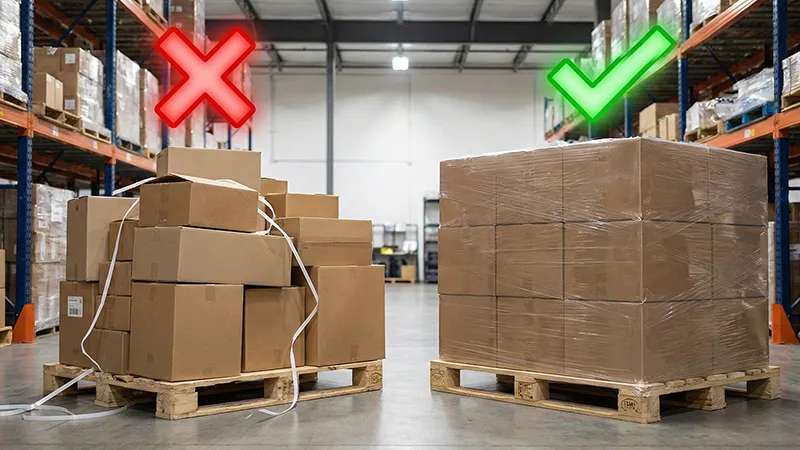
The AGL "Direct Pipe" Problem: AGL is a logistics provider, not a prep center. They transport exactly what your factory gives them. Factories in China often focus on maximizing container space, not FBA compliance. They might "bulge" a carton to fit an extra part, pushing a 36-inch box to 37 inches. Or they might use plastic straps (banding) to secure a heavy box.
-
The Consequence: If AGL delivers a strapped or slightly oversized box to the FC, it will be automatically rejected. The FC will not fix it. They will require the carrier to take it back. Since AGL does not have a local prep network to fix these issues, the shipment often ends up in a "return loop," triggering return freight fees, rework fees at a third-party warehouse, and re-delivery fees. This can cost $500–$1,200 per shipment and add 3 weeks to your lead time.
-
The Zbao "Safety Valve": As your local expert in Shenzhen, we act as a quality control filter. We measure dimensions at our origin warehouse before the goods are loaded onto the vessel. If we find violations (e.g., loose packaging, plastic straps, non-compliant labels), we perform re-boxing, taping, or strapping removal immediately. We ensure your cargo is 100% compliant before it ever leaves China.
Palletization Wars: GMA Standards or Bust
For LCL (Less than Container Load) shipments, pallet quality is the #1 reason for rejection at the dock.
AGL will typically not fix non-compliant pallets at the origin port. Their model assumes the shipper (your factory) has done everything perfectly. However, many Chinese suppliers use "export grade" pallets that are made of plywood or are the wrong size (e.g., Euro pallets 1200x800mm), rather than the strict GMA Standard B (40x48 inches) required by Amazon US.
Furthermore, Amazon has a "Zero Overhang" policy. If your boxes stick out even 1 inch beyond the pallet edge, the shipment can be refused.
Through our Freight Forwarding Services, we build pallets to Amazon's exact specs:
-
Grade B or higher 4-way access wooden pallets.
-
Maximum height of 72 inches (unless a single unit is taller).
-
Heavy-duty stretch wrap to prevent shifting during ocean transit.
-
Proper "Team Lift" labels for boxes over 50 lbs.
We act as your insurance policy against the dreaded "Refused at Dock" stamp.
3. AGL Quote vs DDP All-In: True Landed Cost Checklist
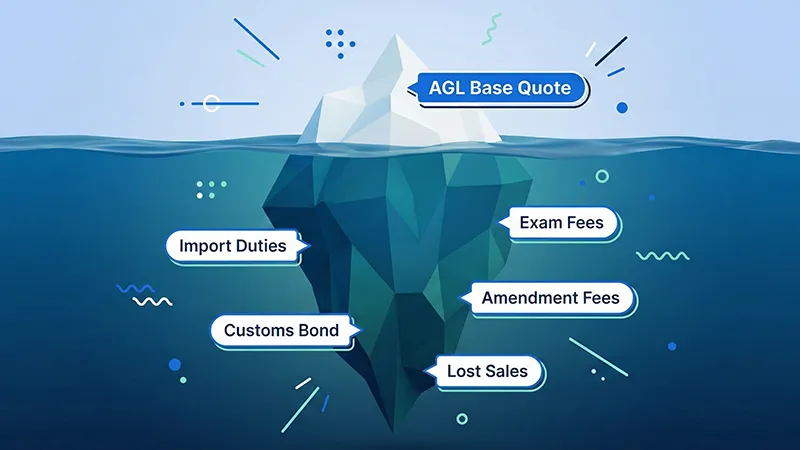
This is the most critical section for your P&L. Understanding the difference between a Quote and an Invoice is the key to profitability in 2026. Why does an $840 AGL quote often turn into a $3,200 invoice?
AGL's "All-In" Mirage: What is Missing?
When you book with AGL, the price you see is often just the Base Freight Rate plus basic origin/destination charges. It explicitly EXCLUDE items that are critical to your total landed cost. You must budget for these separately, but many new sellers forget to do so.
-
Import Duties & Taxes: This is usually the largest hidden cost. Depending on your HTS code (Harmonized Tariff Schedule), duties can range from 0% to 25% (especially with Section 301 tariffs on Chinese goods). AGL does not include this in the quote; they bill you later.
-
Customs Bond: To import into the USA, you must post a Customs Bond to guarantee payment of duties. A Continuous Bond typically costs $350–$850 per year. If you use AGL, you must purchase this bond yourself.
-
Amendment Fees: AGL's system is automated. If you need to change a pickup date, update a weight, or modify a commercial invoice after submission, you are charged an Amendment Fee. These range from $100 to $500 per change. In a dynamic supply chain, changes are common.
-
Customs Exam Fees: If CBP (Customs and Border Protection) decides to inspect your container, the cost of the exam (X-ray or intensive) and the cost of moving the container to the exam site are billed 100% to you. This can range from $150 to over $1,000, plus daily storage fees (demurrage) while the container sits.
-
Drayage & Chassis Split Fees: If your shipment is split into multiple deliveries, AGL may charge additional drayage fees that were not clear in the initial estimation.
Cost Showdown: AGL vs. Zbao DDP All-In
To illustrate the difference, let’s look at a real-world comparison for a typical 5 CBM LCL shipment of general goods (e.g., Kitchen Accessories) from Shenzhen to Los Angeles, with a commercial invoice value of $5,000.
| Cost Item | AGL (Estimated Cost) | Zbao Logistics DDP All-In | Notes on Difference |
| Base Freight Quote | $900 | $1,400 | AGL appears cheaper upfront. Zbao includes premium service. |
| Import Duties (15%) | $750 | $0 (Included) | Zbao DDP includes duties in the upfront price. AGL bills later. |
| Customs Bond | $350 | $0 (Included) | You must buy a bond for AGL. Zbao uses our bond. |
| Drayage/Trucking | $300 | $0 (Included) | Often an extra line item for AGL. Included in Zbao rate. |
| Amendment Risks | $200 | $0 | AGL charges for changes. Zbao is flexible. |
| Potential Exam Fee | $150 (Risk) | $0 (Absorbed) | Zbao absorbs routine exam fees in many contracts. |
| Total Landed Cost | $2,650 ❌ | $1,400 ✅ | Zbao saves you $1,250+ |
Note: The AGL column represents a realistic scenario including common "hidden" costs. The Zbao column is a fixed, all-inclusive price.
The Verdict: For LCL shipments under 20 CBM, or for any seller who wants fixed costs, our DDP Shipping from China service is significantly cheaper. We consolidate multiple shipments to share the bond and entry fees, passing the savings on to you. You pay one price, and you get no surprises. If you’re not sure how your own numbers would look, request a free lane-specific cost breakdown for your next shipment.
4. Compliance: The IOR Minefield
In 2026, compliance is no longer just paperwork; it is a strategic risk factor. Geopolitical tensions and new tariff structures mean US Customs is scrutinizing foreign importers more than ever before.
Can You Use AGL Without a US Entity?
Technically, yes. Amazon allows you to apply for a CAIN (Customs Assigned Importer Number). This identifies you to US Customs as a foreign importer. However, relying on this method carries increasing risks.
-
Digital Scrutiny: With CAIN applications becoming fully digital and HS code enforcement tightening in 2025, CBP has more data than ever to profile shipments.
-
The "High Risk" Flag: CBP considers foreign IORs (Importers of Record) to be higher risk because they have no physical assets in the US to seize if duties are unpaid or regulations are violated.
-
Higher Exam Rates: Consequently, foreign IORs face a 2-3x higher customs examination rate. An exam doesn't just cost money; it costs time. A 5-day exam delay can cause you to miss your Amazon check-in appointment, leading to a reschedule that pushes your stockout to 3 weeks.
🚩 Critical Compliance Alert:
In our analysis of Seller Central threads, about 4 in 10 first-time IOR setup attempts with AGL involved at least one rejection due to minor mismatches (e.g., address formatting, entity name, missing comma). Each rejection can delay your shipment setup by 5–7 days.
The Zbao DDP Solution: Escape the Liability
When you choose Zbao Logistics' DDP service, we act as the Importer of Record (in most DDP scenarios).
-
We assume the legal liability: We are responsible for the classification and entry.
-
We use our own Bond: You don't need to buy one.
-
Lower Risk Profile: Because we import thousands of containers a year and have a long standing relationship with CBP, our shipments are viewed as "known & trusted," resulting in fewer exams and faster clearance.
-
Bill Shock Protection: If an exam does happen, we often cap or absorb the cost (depending on specific contract terms), whereas AGL passes 100% of the cost to you.
5. Objectivity Check: When AGL Actually Works
We believe in intellectual honesty. Zbao Logistics might not be the right fit for every seller. Amazon Global Logistics (AGL) is a valid, powerful option for specific business models. For official program details, always refer to Amazon's official AGL documentation in Seller Central.
✅ The 30% Use Case: When to Choose AGL
-
High Volume (FCL): If you ship >50 CBM (Full Containers) per month consistently, AGL's base ocean rates are very competitive. At this scale, the savings on the base rate might outweigh the lack of service, provided you have a perfect process.
-
Compliance Ready: If you already have an established US Entity (LLC/Corp), a valid Continuous Bond, and an internal logistics team to manage ISF filings and HTS classification, you can navigate AGL's bureaucracy effectively.
-
Standard Goods: If you ship simple, standard-size, low-tariff goods (e.g., plastic storage bins, simple textiles) that are perfectly palletized by a sophisticated factory, AGL's "Direct Pipe" works well.
✅ The 70% Use Case: When to Choose Zbao DDP
-
Small to Mid Volume: You ship <50 CBM or use LCL. The per-unit savings of DDP consolidation are massive here.
-
Budget Certainty: You are a business owner who needs a Guaranteed Landed Cost to calculate profit margins accurately. You cannot afford a surprise $1,000 invoice.
-
No US Entity: You are a foreign seller who wants to avoid IOR liability and bond purchases.
-
Complex Cargo: You ship Oversized / Ugly Freight (Furniture, Gym Equipment, Machinery) or fragile items that need a "Safety Valve" inspection.
6. 2026 Strategy: How to Phase Your Logistics
If you are planning your supply chain for the coming year, we recommend a phased approach to minimize risk while optimizing costs. Do not put all your eggs in one basket.
Phase 1: Launch & Validation (New Products)
Recommendation: Use Contact Zbao Logistics for DDP Air or Fast Sea Shipping.
-
Why: Speed and compliance are key. You need to get the product to FBA to validate sales velocity. You cannot afford customs delays on a launch. DDP ensures you know your exact break-even point.
Phase 2: Growth & Optimization (Standard Goods)
Recommendation: Hybrid Model.
-
Why: Once a standard-size SKU exceeds 50 CBM/month, you may consider testing AGL for that specific SKU to capture potential freight savings. However, keep 30-50% of your volume with Zbao to ensure you have a backup channel if AGL faces congestion or rejects a shipment.
Phase 3: Complex & Peak Season (Oversized/Urgent)
Recommendation: Private Forwarder Exclusive.
-
Why: For "Ugly Freight" or during Q4 Peak Season (Oct-Dec), the cost of failure is too high. Keep these sensitive shipments with a private forwarder who can re-route, re-label, and fight for appointments on your behalf. Do not risk your Q4 on an automated system.
7. FAQ: Common Questions About AGL vs. Forwarders
Q1: Is AGL cheaper than a private freight forwarder in 2026?
On paper, AGL's base ocean rates often look 10-20% lower. However, once you add mandatory customs bonds, duties, amendment fees, potential exam fees, and the risk of delays, a private DDP forwarder like Zbao Logistics is often 15-25% cheaper for LCL shipments under 20 CBM. For FCL, it depends on your internal compliance capabilities.
Q2: Does Amazon Global Logistics handle customs clearance?
AGL acts as a broker, but YOU are the Importer of Record (IOR). This is a critical distinction. AGL processes the paperwork, but you are legally responsible for the accuracy of the HTS codes, the payment of duties, and any penalties. Zbao DDP service takes this burden off your shoulders.
Q3: What happens if Amazon rejects my oversized shipment?
If AGL delivers a non-compliant shipment to an FC, it will be rejected. You will be responsible for paying to transport the goods out of the FC, fix the packaging at a 3rd party warehouse, and re-deliver them. This "Reverse Logistics" nightmare can cost thousands of dollars. Zbao prevents this by checking compliance in China.
Q4: Can I switch from AGL to a private forwarder mid-shipment?
No. Once AGL has picked up the cargo, it is locked into Amazon's network. You cannot divert it. However, you can switch providers for your next shipment immediately. We recommend testing Zbao with a single shipment to compare the experience.
Q5: What is the "Amendment Fee" and why does AGL charge it?
An amendment fee applies if you need to change any details of your booking (weight, carton count, pick-up date) after it is finalized. AGL charges this to discourage changes. Zbao Logistics understands that manufacturing schedules shift; we offer more flexibility and rarely charge for minor updates.
8. Methodology & Disclaimer
Data Sources: This analysis is based on a synthesis of seller-reported cases from r/FulfillmentByAmazon and Amazon Seller Central Forums (Q1-Q3 2025), direct interviews with active FBA sellers, and public AGL rate sheets available as of late 2025.
Disclaimer: Logistics rates, tariff policies, and Amazon guidelines fluctuate. Always verify current terms in Seller Central. Zbao Logistics is an independent freight forwarder and is not affiliated with Amazon.
Conclusion
In 2026, the cheapest quote isn't always the cheapest solution.
AGL is a powerful tool for massive, established sellers shipping full containers of standard goods. But for growing businesses, the lack of flexibility, the high rejection risk for oversized items, and the "death by a thousand cuts" of hidden fees can be fatal to your margins.
Choosing a transparent, local expert like Zbao Logistics gives you something money can't buy: Peace of Mind. We handle the complexity of customs, compliance, and oversized cargo so you can focus on what you do best: growing your Amazon brand.
Ready to see your TRUE shipping costs?
This is a no-obligation, numbers-only comparison. If AGL is truly cheaper for your specific case, we’ll be honest and tell you that. But if we can save you money and headaches, isn't it worth knowing?


