US Base Ports Guide 2026: Terminal Strategies & Operational Maps
At Zbao Logistics, we often hear clients ask: "What is the ocean freight to the USA?"
Our answer is always: "Which America?"
Shipping to Los Angeles is a completely different game from shipping to New York or Houston. The United States is not one market; it is three distinct coastlines, each with its own rules, terminals, and advantages.
The Problem with Generic Guides:
Most freight forwarders only look at the "Port." They'll tell you to ship to "Houston" without realizing that choosing the wrong terminal (Barbours Cut instead of Bayport) could mean missing the newest Neo-Panamax vessels. Or they'll book "Seattle" without knowing that Tacoma's Husky Terminal has superior rail capacity.
In this master guide, we map out the Major US Base Ports we service from our China headquarters, revealing the specific operational realities that generic guides miss.
Region 1: The West Coast (Speed & IPI Hubs)
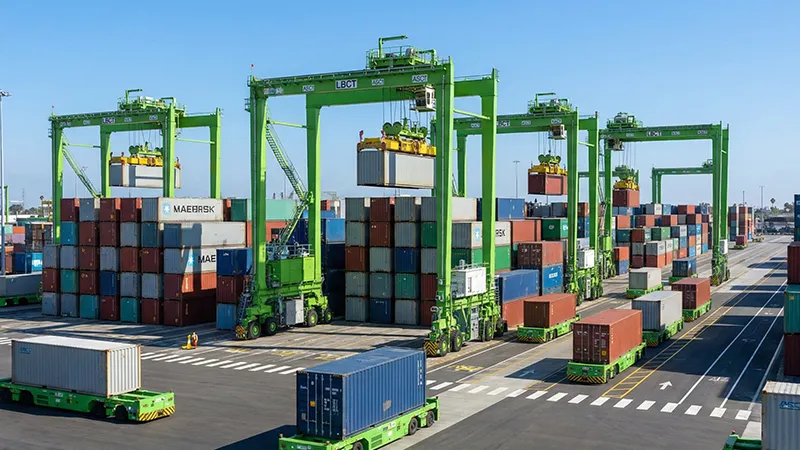
The Gateway to the Pacific. Best for: Urgent E-commerce, Fashion, Electronics.
From our perspective in Shenzhen, the West Coast is all about Speed (14-18 days transit). But in 2026, the risk isn't the port—it's the equipment.
1. Los Angeles & Long Beach (LA/LB)
The "San Pedro Bay Complex" handles ~40% of US imports.
-
Strategic Role: The default entry point for speed and the gateway to the IPI Rail Network (Chicago/Dallas).
-
Terminal Intel (Zbao Exclusive):
-
LBCT (Long Beach Container Terminal): We call this the "Tesla" of terminals. It runs 18 fully electric cranes and automated stacking systems. It is consistently the fastest for truck turn times because machines don't take lunch breaks.
-
APM Terminals (Pier 400): The massive Maersk hub. Efficient, but huge.
-
WBCT: A heavy-volume terminal often used by COSCO.
-
-
The 2026 Risk: While labor is stable, Chassis Shortages are critical at inland rail points. We advise keeping cargo "local" or transloading in LA rather than railing deep inland if possible.
2. Seattle & Tacoma (The NW Seaport Alliance)
-
Strategic Role: The secret weapon for the Upper Midwest.
-
Key Terminal: Husky Terminal (Tacoma).
-
Why we like it: Unlike generic terminals, Husky boasts 22,000 feet of on-dock rail track. It is purpose-built for moving heavy volume directly onto trains (IPI) without the bottlenecks you see in LA.
-
Deep Dive: Want the fastest route? Read our Yantian to West Coast Routing Guide.
Region 2: The East Coast (Stability & Volume)
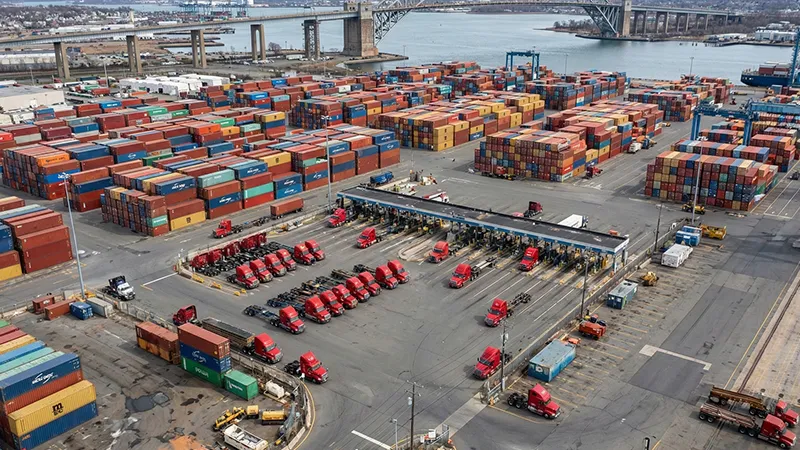
The Atlantic Gateway. Best for: Retail Distribution, Furniture, NYC Consumables.
Good News for 2026: The ILA (East Coast Union) contract is settled through 2030, which significantly reduces labor disruption risk for 2026 planning.
1. New York / New Jersey (NY/NJ)
The largest port complex on the East Coast.
-
Strategic Role: Feeding the massive consumer market of the Northeast.
-
Terminal Warning (Operational Reality):
-
Maher Terminal: The legacy giant in Elizabeth, NJ. Warning: They have strict free-time appointment windows. If our driver misses the slot, the appointment is void. We strictly manage this for you.
-
APM Terminals Elizabeth: Highly modernized, but gate discipline is tight.
-
GCT Bayonne: Located before the Bayonne Bridge, allowing the biggest mega-vessels to dock.
-
2. Charleston (CHS) – The Comeback Kid
-
Strategic Role: A key competitor to Savannah.
-
Zbao Insight: The Hugh K. Leatherman Terminal is fully operational for 2026 after years of union disputes. This adds massive capacity to the Southeast.
3. Savannah (SAV)
The "Garden City." The darling of e-commerce.
-
Strategic Role: The most efficient gateway for the Southeast.
-
Key Asset: Mason Mega Rail. Cargo moves from ship to train in <24 hours.
-
Deep Dive: Read why Savannah is the Cost-Saver King.
Region 3: The Gulf Coast (The Industrial Heartland)
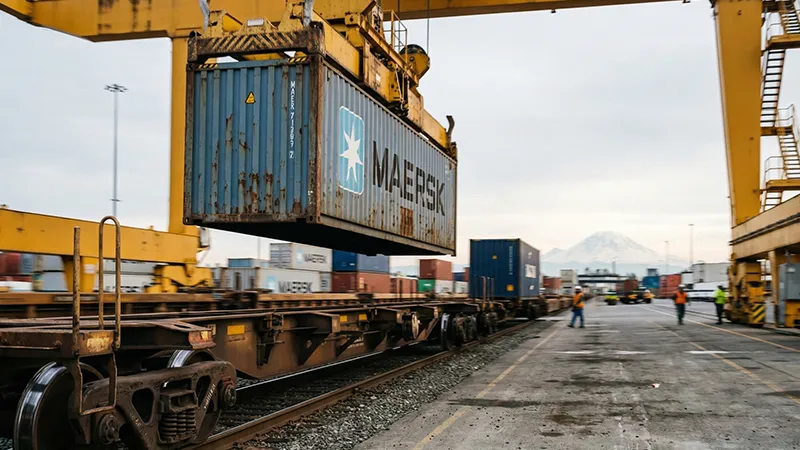
The "Third Coast." Best for: Heavy Machinery, Plastics, Texas Market.
1. Houston (HOU)
The energy capital.
-
Strategic Role: The only logical choice for oversized/heavy cargo destined for Texas.
-
Key Terminals:
-
Bayport (BPT): The modern choice (Preferred by COSCO). It handles ~60% of container volume and is optimized for Neo-Panamax ships.
-
Barbours Cut (BCT): The older facility. While capable, it is currently undergoing significant rehab work.
-
-
The Zbao Advantage: We specialize in Houston's Overweight Corridor. This state law allows us to move containers up to 93,000 lbs (6-axle) or 100,000 lbs (7-axle) Gross Vehicle Weight within a 30-mile radius. Most forwarders don't know this and will cap you at 44,000 lbs.
2. Mobile (MOB)
The rising star.
-
Strategic Role: The congestion-free alternative with direct rail to Chicago.
Summary: The Zbao Port Selector Matrix (2026 Edition)
How do we decide where to route your cargo? We use this simple matrix:
| Priority | Region to Choose | Best Base Port | Why? |
| Speed (Urgent) | West Coast | LA/LB (LBCT) | Automation = Speed. 14-day transit. |
| Rail to Midwest | Pacific NW | Tacoma (Husky) | 22,000 ft rail track capacity. |
| Cost (Savings) | East Coast | Savannah | Lowest drayage rates to DCs. |
| Volume (Retail) | East Coast | NY/NJ | Direct access to 20M consumers. |
| Heavy (Machinery) | Gulf Coast | Houston | Overweight Corridor (93k lbs GVW). |
FAQ: What Generic Guides Don't Tell You
Q: Is the East Coast safe from strikes in 2026?
A: The outlook is very positive. The ILA union signed a 6-year contract effective until 2030, which provides a stable labor environment for the foreseeable future.
Q: Why is my rail cargo stuck in LA?
A: It's likely an "Inland Equipment Imbalance." In 2026, there is a shortage of chassis and empty containers at inland rail ramps (like Chicago/Memphis). This causes backups in LA. Our Fix: We often recommend Transloading in LA to trucks for faster delivery.
Q: Which NY/NJ terminal is best?
A: It depends on your carrier. However, Maher Terminal is the most "neutral" (non-carrier owned) and handles huge volumes, but their appointment system requires precise timing. We handle that coordination for you.
Conclusion: Location is Strategy
Choosing the right base port is not just about the ocean rate; it is about the "Last Mile." Shipping to the wrong terminal (like missing a strict appointment window at Maher) can cost you thousands in trucking fees.
At Zbao Logistics, we don't just book a "US Port." We book the specific terminal that makes sense for your final delivery address.
Talk to a real China-based forwarding team who knows these terminals inside out.


