Ocean Freight Forwarding from China to USA: How It Works, What It Costs, and How to Choose Right
On April 5, 2026, the last $800 de minimis exemption for Chinese-origin goods was eliminated. Combined with Section 301 tariffs now stacked above 55% on many product categories and a sharp increase in CBP document examinations at major US ports, the cost of getting ocean freight wrong in 2026 is higher than it has ever been. A misclassified HS code, an unlicensed forwarder, or a contract with no demurrage clause can quietly drain more margin than a bad supplier negotiation.
Most importers treat freight forwarding as a commodity find the lowest quote, book it, hope for the best. This guide exists for the ones who have learned, or want to learn before they have to, that the forwarder behind the quote matters as much as the number on it. You will find the complete eight-step shipping process, the three hidden fees that account for most post-booking surprises, and a practical checklist for verifying that your forwarder is actually qualified to handle your shipment.
What Is an Ocean Freight Forwarder?
An ocean freight forwarder is a licensed intermediary that organizes international cargo shipments on behalf of importers and exporters. It does not own vessels. Instead, it negotiates space on ships operated by major carriers, manages the documentation required at both the origin and destination, coordinates customs clearance, and arranges final delivery. The forwarder's value is the institutional knowledge it brings to a process that is, for most importers, opaque and full of regulatory exposure.
There is a distinction worth understanding before you choose one. Three types of entities operate in ocean shipping, and they carry different legal obligations.
A Freight Forwarder (OTI) acts as your agent. It arranges transportation on your behalf but does not legally assume responsibility for the cargo itself. An NVOCC (Non-Vessel Operating Common Carrier) is legally classified as a carrier. It issues its own House Bill of Lading and assumes full liability for your goods from origin to destination. An Ocean Carrier (Maersk, COSCO, MSC) owns the vessel and is responsible for the sea leg only.
This distinction matters most when something goes wrong. A forwarder operating purely as an agent has limited legal accountability if cargo is lost or damaged at sea. An NVOCC accepts carrier-level liability under US maritime law giving you direct legal recourse without having to chase the actual vessel operator. ZBAO Logistics holds both an FMC registered OTI Freight Forwarder license and an NVOCC license, a combination relatively few China-to-USA providers can offer.
How the Ocean Freight Forwarding Process Works: Step by Step
A complete China-to-USA shipment moves through eight stages. Here is what happens at each one and where most first-time importers run into problems they did not see coming.
Step 1 — Quote and Booking. Your forwarder collects cargo dimensions, weight, commodity description, and destination, then sources the best available sailing schedule and rate. This is the stage to confirm your Incoterms. The difference between EXW and FOB is not just contractual, it determines who arranges and pays for origin-side logistics, and where your liability begins. A practical breakdown of how each term plays out in real China-to-USA shipments: FOB vs. EXW: which Incoterm is right for your shipment.
Step 2 — Cargo Pickup. For EXW shipments, the forwarder arranges local trucking from the factory or consolidation warehouse in China. One thing to verify before booking: whether the quoted rate is door-to-port or port-to-port. Many lower-cost forwarders quote port-to-port and invoice origin trucking separately. The gap is typically $150 to $400. A small number that tends to generate disproportionate frustration when it appears unexpectedly.
Step 3 — Export Customs Declaration. Before cargo leaves China, your forwarder prepares the commercial invoice, packing list, and export declaration for submission to Chinese Customs (GACC). Getting the HS Code right here matters in two directions: a wrong classification forfeits China export tax rebates and increases the probability of CBP examination on arrival in the US. You can verify the correct code for your product using the USITC official HTS code database.
Step 4 — Container Loading (FCL or LCL). Your cargo is loaded into a full container (FCL) or consolidated with other shippers in a shared container (LCL shipping). FCL makes financial sense above roughly 15 to 18 CBM and eliminates the commingling risk inherent in LCL. Below that threshold, LCL is typically the right economic choice though factor in the additional two to five days for consolidation and deconsolidation at each end.
Step 5 — Ocean Transit and Tracking. Once the vessel departs, your forwarder monitors the shipment and flags any transshipment delays or schedule changes. The difference between a good forwarder and a mediocre one is often most visible here: proactive milestone updates versus silence until you follow up.
Step 6 — ISF Filing. The Importer Security Filing (ISF 10+2) must reach CBP at least 48 hours before the vessel arrives at a US port. A late or inaccurate filing carries penalties of up to $5,000 per shipment. Some low-cost forwarders exclude ISF from their base quote without flagging it, always confirm it is included before booking. For the full regulatory requirements, see CBP's official ISF filing page. For a plain-language explanation of what triggers penalties and how the timeline works: what ISF filing requires and what happens when it is late.
Step 7 — US Customs Clearance. Your forwarder coordinates with a licensed US customs broker to file the entry, calculate applicable duties including Section 301 tariffs and any antidumping or countervailing duties and obtain CBP release. Before your cargo arrives, confirm the Demurrage and Detention free time in writing. At most US ports, the free window is three to seven calendar days. CBP document examinations have increased substantially at Los Angeles, Long Beach, and Savannah in 2026. When a hold pushes cargo past the free-time threshold, the cost runs $150 to $300 per container per day. Establish in the contract who is responsible when the delay originates from the forwarder's documentation, not yours.
Step 8 — Final Mile Delivery. A dray carrier moves your container from the port to its destination: a private warehouse, a 3PL facility, or an Amazon FBA fulfillment center. For FBA shipments, tell your forwarder upfront whether cargo requires FNSKU labeling, unit prep, or LTL delivery with a scheduled delivery window appointment. Amazon's inbound requirements are specific and strictly enforced. A forwarder unfamiliar with them will generate compliance failures that show up on your Seller Central account.
Core Ocean Freight Forwarding Services
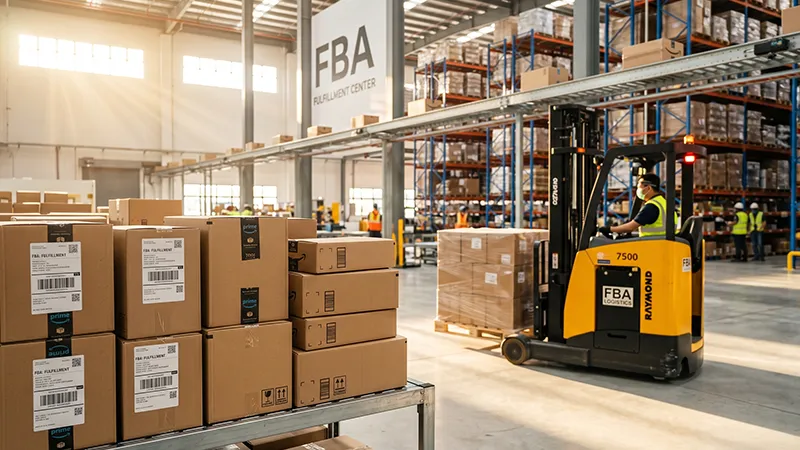
A full-service forwarder covers more than vessel booking. The services you should expect and verify are actually included are FCL, LCL, door-to-door coordination, customs brokerage, cargo insurance, and FBA first-mile shipping for Amazon sellers.
Cargo insurance is worth addressing directly because it is widely misunderstood. Standard carrier liability under COGSA is capped at $500 per shipment regardless of cargo value. For most importers, that ceiling provides essentially no practical protection on a container of commercial goods. All-risk cargo insurance covers physical loss, theft, and damage from the origin warehouse to the final destination. The premium is modest relative to the exposure it eliminates, and it is one of the more straightforward decisions in international logistics.
For Amazon FBA sellers, there is an additional layer of forwarder qualification that most importers never think to ask about. Amazon operates three certification programs for freight partners, each with a direct impact on account health and operational efficiency.
The first is FIST: FBA Inbound Shipment Tracking. Carriers holding this certification have their tracking data feed directly into Seller Central, with no manual upload required. FIST also enables Smart Reroute, Amazon's system for automatically redirecting inbound shipments to faster or more appropriate fulfillment centers. The second is ShipTrack, which ensures real-time tracking milestones sync into Seller Central and protects your account from Inbound Performance Visibility defects caused by tracking gaps. The third is SPN, the Amazon Service Provider Network: an audited directory of vetted logistics partners selectable directly within Seller Central. Browse the full network on Amazon's official SPN page.
Very few forwarders hold all three certifications. ZBAO Logistics does meaning FBA shipment data flows into your Seller Central account automatically, your inbound performance record is protected, and our credentials are verifiable directly through Amazon.
The Hidden Costs That Catch New Importers Off Guard
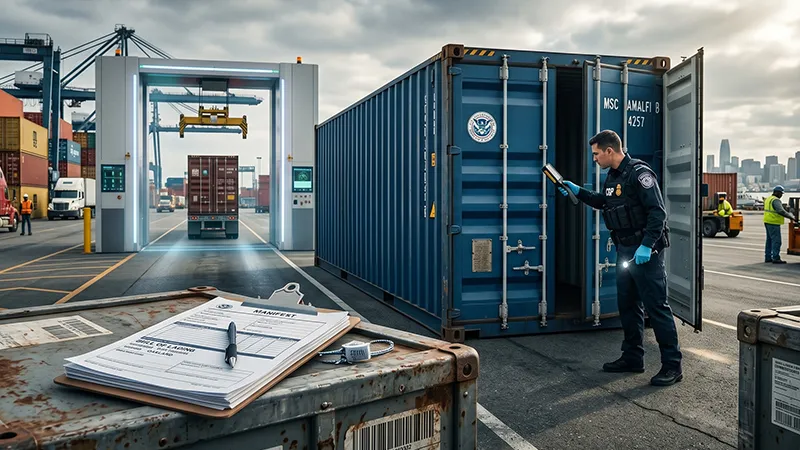
The freight industry has a long tradition of advertising low base rates and recovering margin through surcharges that appear after the booking is locked. Three of them account for the majority of post-invoice disputes.
General Rate Increases and Peak Season Surcharges. Carriers issue GRI notices with as little as 30 days' lead time, adding hundreds of dollars per container. From August through October, a Peak Season Surcharge of $500 to $1,000 per container applies on most China-to-US trades. Some forwarders present rates that predate a GRI and make no adjustment when it hits, leaving importers to absorb the difference without warning. Ask specifically whether GRI and PSS exposure is fixed in the quoted rate, and get the answer in writing.
Demurrage and Detention. Free time at US ports averages three to seven calendar days. After that, Demurrage, the cost of a container sitting at the terminal. And Detention, the cost of holding a chassis past the return deadline begin accruing at $150 to $300 per container per day. With CBP document exam holds increasing sharply in 2026, this is no longer a theoretical risk. It is a frequent outcome that importers are consistently underprepared for. The contract clause that matters: who bears D&D costs when the delay is caused by the forwarder's documentation errors, not yours.
CBP Exam Fees. When CBP selects your container for examination — an X-ray, a document hold, or a full intensive exam. All associated costs fall on the importer. Scanning, devanning, re-stuffing, and temporary warehousing run from $300 for a routine X-ray to over $1,500 for an intensive inspection. Accurate HS codes, precise commodity descriptions, and correctly valued invoices reduce the probability meaningfully. A forwarder who rushes the export declaration is creating exam risk that shows up on your bill weeks later.
At ZBAO Logistics, every quote is all-in. Every surcharge we are aware of at the time of booking is itemized upfront — GRI exposure, ISF filing, all known destination fees. There are no post-booking additions. Request a quote here and see what that looks like in practice.
Air Freight vs. Ocean Freight — Which One Do You Actually Need?
The decision comes down to three variables: volume, time sensitivity, and margin per unit.
Ocean freight is the right call for shipments above roughly 500 kilograms where a transit time of 15 to 35 days is acceptable. It is the standard for planned FBA inventory replenishment, seasonal stock builds, and any product where keeping freight cost per unit low is essential to the margin structure.
Air freight costs four to six times more per kilogram but delivers in three to seven days. It is the right tool when you are facing an imminent stockout, shipping high-margin goods where the premium is absorbed, or running a small test order where speed matters more than cost efficiency. For most FBA operations, ocean freight is the default and air freight is the emergency lever, not a routine alternative.
| Ocean Freight | Air Freight | |
|---|---|---|
| Cost | Low, most cost-efficient per CBM/kg | 4-6x higher per kg |
| Transit (China to US) | 15-35 days by route | 3-7 days door-to-door |
| Best for | Large volume, planned replenishment | Urgent restocks, high-margin, small qty |
| FBA use case | Planned inventory cycles | Emergency restock to prevent stockout |
| Carbon footprint | Significantly lower | Approx. 50x higher per kg |
How to Verify and Choose a Reliable Ocean Freight Forwarder
Most importers evaluate forwarders on price and responsiveness. Those matter, but they are not what separates a forwarder who protects your shipment from one who exposes it.
1. Verify the FMC license. Every legitimate US ocean freight forwarder must be registered with the Federal Maritime Commission as a licensed Ocean Transportation Intermediary. Do not take their word for it. Search the official database yourself: Federal Maritime Commission — OTI License Lookup (fmc.gov/oti). Enter the company name or FMC number. Confirm active registration, valid surety bond, and clean compliance history. An unlicensed forwarder has no regulated obligation to protect your cargo or your funds. This check takes two minutes.
2. China-to-USA lane experience. Generic "global coverage" is not the same as documented expertise on the routes your suppliers use. Ask which Chinese origin ports they work with directly Yantian, Shekou, Ningbo, Shanghai, Qingdao and which US destination terminals they have established relationships with.
3. All-in transparent pricing. A credible forwarder can produce a quote that itemizes every known charge: ocean freight, origin charges, ISF filing, customs entry, destination THC, drayage, and applicable surcharges. If the quote is a single number with no breakdown, ask for it. If they resist, that is your answer.
4. Proactive tracking. Automated milestone notifications container loaded, vessel departed, arrived at port, customs released without you having to request them. This is a basic operational standard, not a premium feature.
5. Amazon FBA inbound compliance. FNSKU labeling standards, carton marking requirements, LTL appointment protocols, and shipment reconciliation procedures change regularly. A forwarder who is not current on Amazon's requirements will generate compliance failures that affect your account health.
6. Amazon certifications: FIST, ShipTrack, SPN. These are verifiable credentials with direct consequences for your Seller Central performance. Very few forwarders hold all three. ZBAO Logistics does.
If you are still early in the evaluation process, this guide covers the practical warning signs that separate legitimate operators from those cutting corners: 5 red flags when choosing a China freight forwarder.
Frequently Asked Questions
What is the difference between an NVOCC and an ocean freight forwarder?
A freight forwarder acts as your agent. It arranges transportation but does not assume legal liability for your cargo. An NVOCC is classified as a carrier under US maritime law. It issues its own House Bill of Lading and accepts full cargo liability from origin to destination. If cargo is lost or damaged, you have direct legal recourse against an NVOCC rather than having to pursue the vessel operator separately. Some providers, including ZBAO Logistics, hold both licenses simultaneously.
What does an ocean freight forwarder do?
A forwarder manages the complete logistics chain on your behalf: booking vessel space with ocean carriers, preparing and submitting export and import documentation, filing ISF with CBP, coordinating customs clearance, and arranging port-to-door delivery. For FBA sellers, a qualified forwarder also handles Amazon-specific inbound requirements including labeling, carton compliance, and delivery appointment scheduling.
How much does ocean freight forwarding cost from China to the USA in 2026?
Using Shenzhen (Yantian) to Los Angeles on a 40HQ container as a Q2 2026 reference: base ocean freight runs $2,181 to $2,580 port-to-port; ISF filing adds $25 to $50; US customs entry costs $150 to $300; destination THC and drayage add $300 to $600. During peak season from August through October, expect an additional $500 to $1,000 in Peak Season Surcharges. All-in, excluding import duties and any CBP exam fees, the total typically falls between $2,800 and $4,500. Rates move with market conditions always request an itemized all-in quote before committing.
How do I verify an ocean freight forwarder's FMC license?
Use the Federal Maritime Commission's official OTI lookup tool at fmc.gov/oti. Search by company name or FMC registration number. The database shows active registration status, surety bond validity, and any compliance issues on record. Any forwarder handling US imports must hold this license there is no legitimate exception.
What is the difference between FCL and LCL ocean freight?
FCL (Full Container Load) means you book an entire 20GP, 40GP, or 40HQ container exclusively for your cargo right for shipments above roughly 15 to 18 CBM, or when cargo security is a priority. LCL (Less than Container Load) means your goods share a container with other shippers and are billed by CBM. LCL is cost-effective for smaller volumes but adds two to five days for consolidation and deconsolidation at each end of the journey.
The Bottom Line
A reliable freight forwarder does not add cost to your supply chain it removes the hidden costs that an unreliable one creates. In 2026, with CBP exams up, tariffs stacked, and Amazon's inbound standards tighter than ever, the forwarder you choose is one of the more consequential decisions in your operation. The credentials to look for are real and verifiable: FMC registration, NVOCC licensing, and for FBA sellers Amazon FIST, ShipTrack, and SPN certifications.
ZBAO Logistics holds all of the above. If you want an itemized all-in quote for your next China-to-USA shipment, we turn those around within 24 hours.


